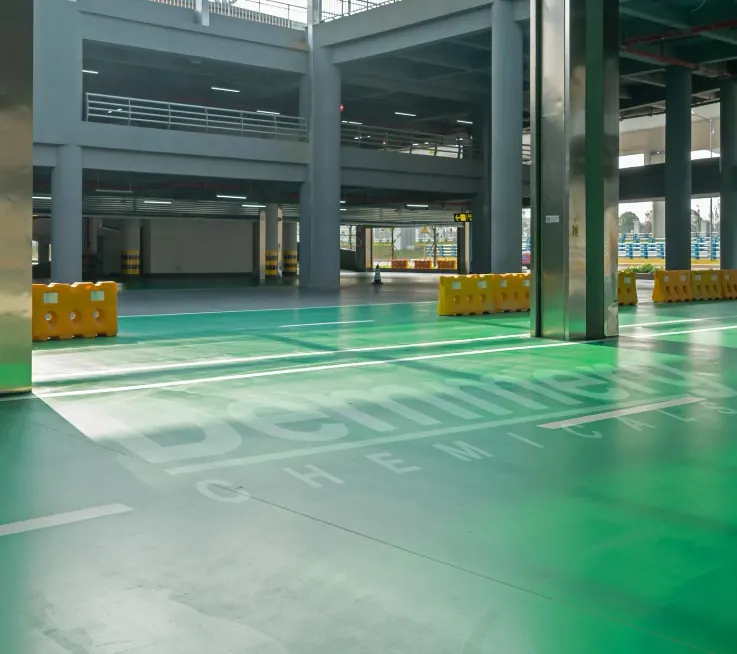
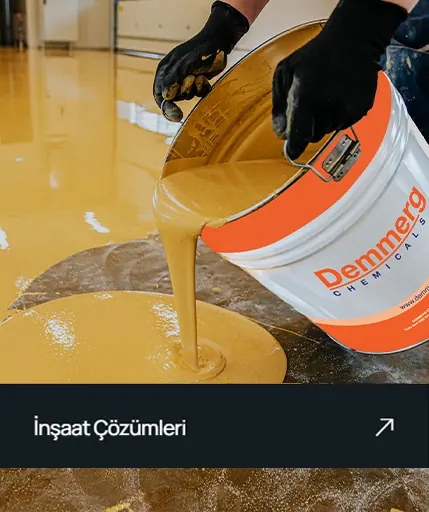
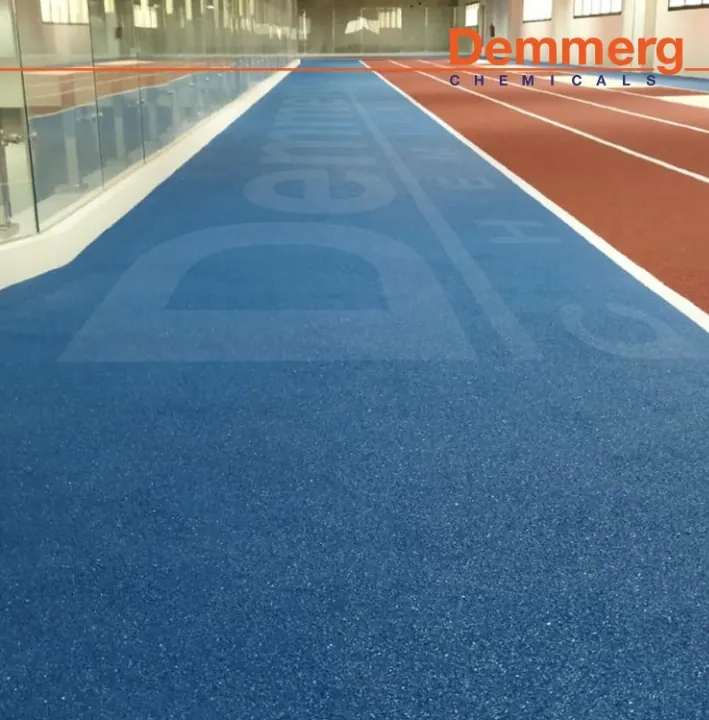
An epoxy primer is the first coat applied to concrete and cementitious floors before an epoxy, polyurethane or polyurea coating; it penetrates the capillary pores of the concrete, stops dusting, raises the impact and chemical resistance of the surface and bonds the following coats to it. The right primer depends on slab moisture, site ventilation and the system on top; Demmerg manufactures solvent-free, moisture-tolerant, fast, water-based, thixotropic and conductive DEMCO epoxy primers at its plant in Tuzla, Istanbul.
This guide groups DEMCO primers by the uses stated in their data sheets. All are two-component products tested to EN 1504-2 under the CE certificate.
Dry concrete, general-purpose primer:DEMCO EPOX 100 PR is a solvent-free, low-viscosity (200–350 mPas) impregnating primer. It is used under all epoxy and polyurethane coatings and as a primer and binder in concrete repairs; one coat at 0.350–0.500 kg/m² gives a dry film of 220–250 µm. Many DEMCO data sheets specify impregnating the concrete with this primer first.
Concrete and wood:DEMCO EPOX 105 PR primes wood as well as concrete and cementitious surfaces, at 0.100–0.150 kg/m² per coat.
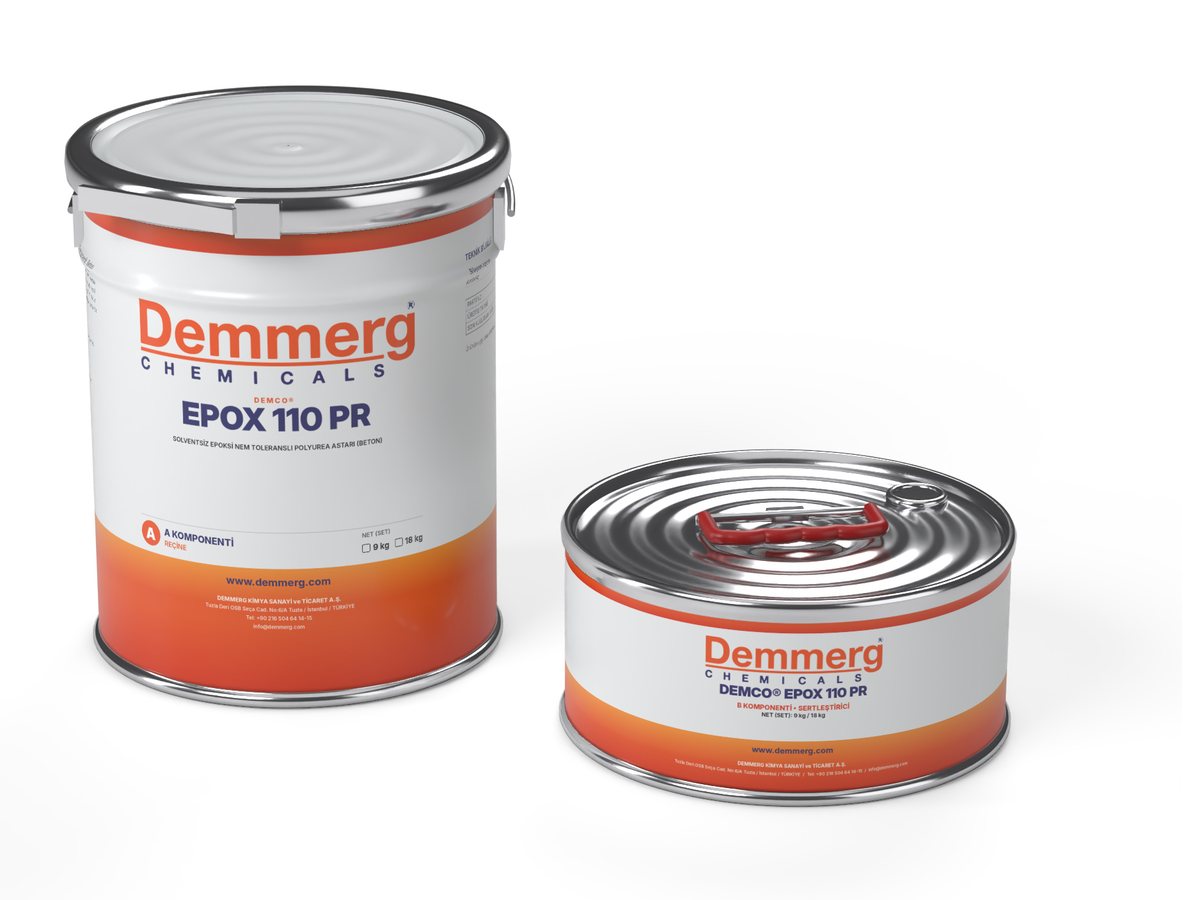
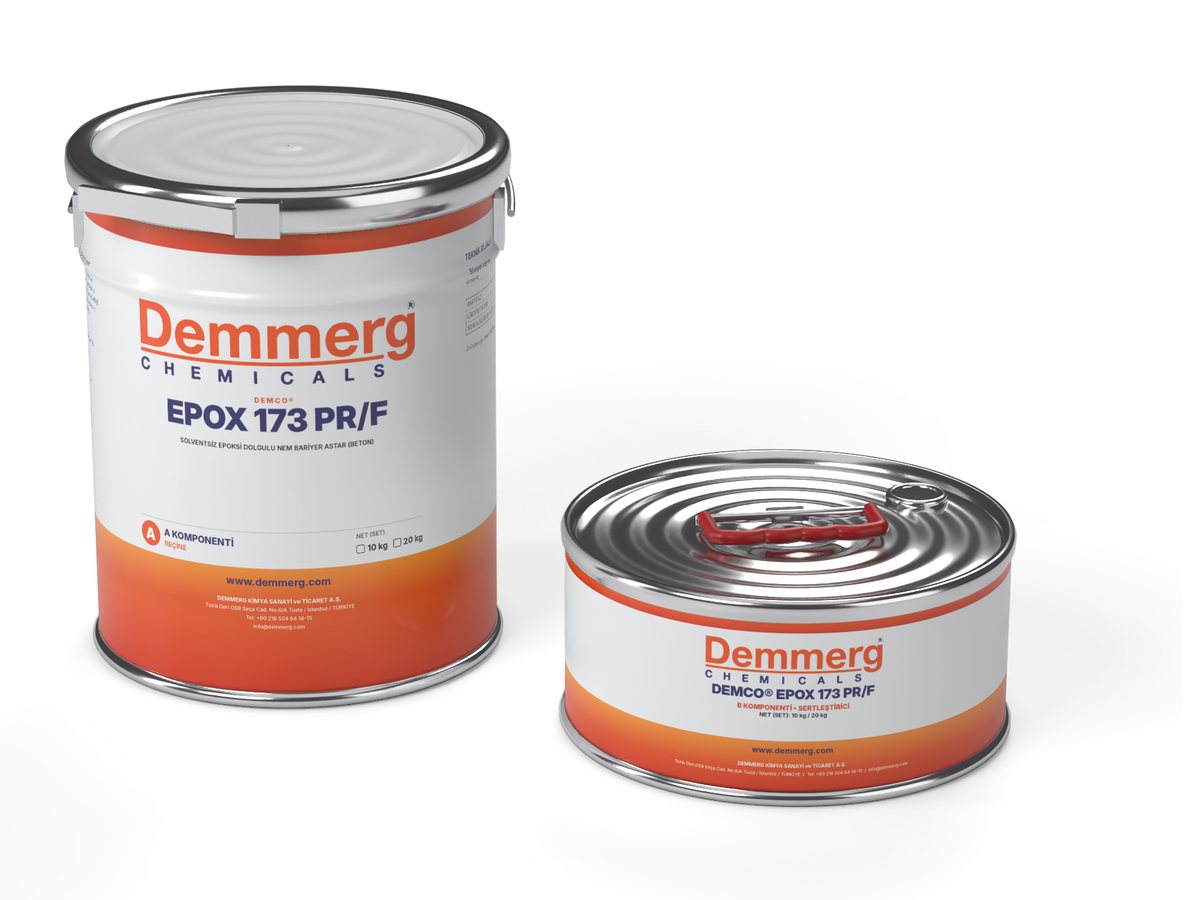
Damp concrete (moisture-tolerant primer):DEMCO EPOX 110 PR, DEMCO EPOX 112 PR and lightly filled DEMCO EPOX 173 PR/F are surface-tolerant epoxy moisture barriers. They bond to damp surfaces and go under epoxy, polyurethane and polyurea coatings; apply by brush or roller, with coverage depending on the substrate.
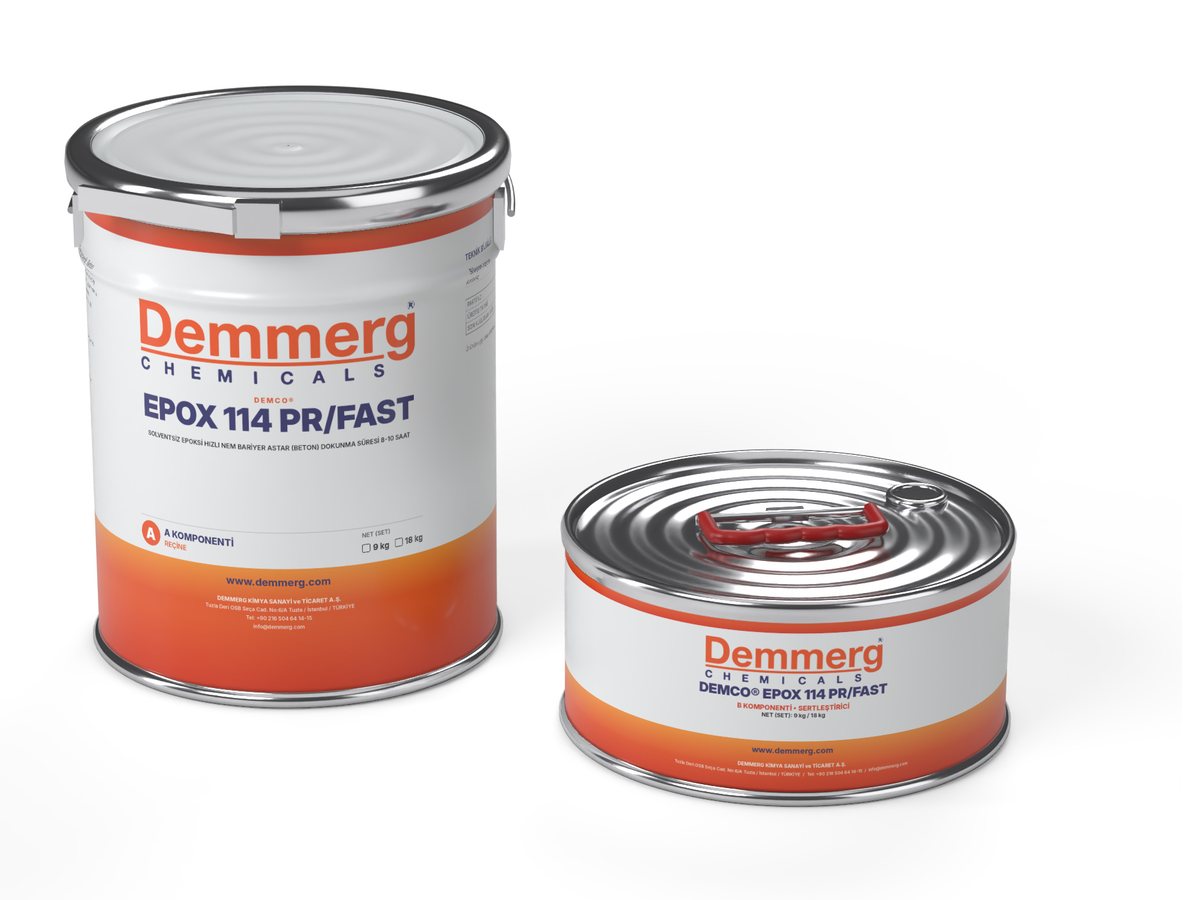
Fast-track jobs:DEMCO EPOX 114 PR – FAST is the fast version of the epoxy moisture-barrier primer, tack-free in 8–10 hours (10–12 hours for 110 PR and 112 PR).
Poorly ventilated areas (water-based):DEMCO EPOX 180 PR/W is a water-based, odorless impregnating primer that can be used where ventilation is inadequate, at 0.150–0.200 kg/m² per coat.
Solvent-based impregnating primer:DEMCO EPOX 130 PR/S is a low-viscosity (200–300 mPas), solvent-based concrete primer, tack-free in 40–70 minutes and ready for the next coat in 8–10 hours; 0.150–0.200 kg/m² per coat.
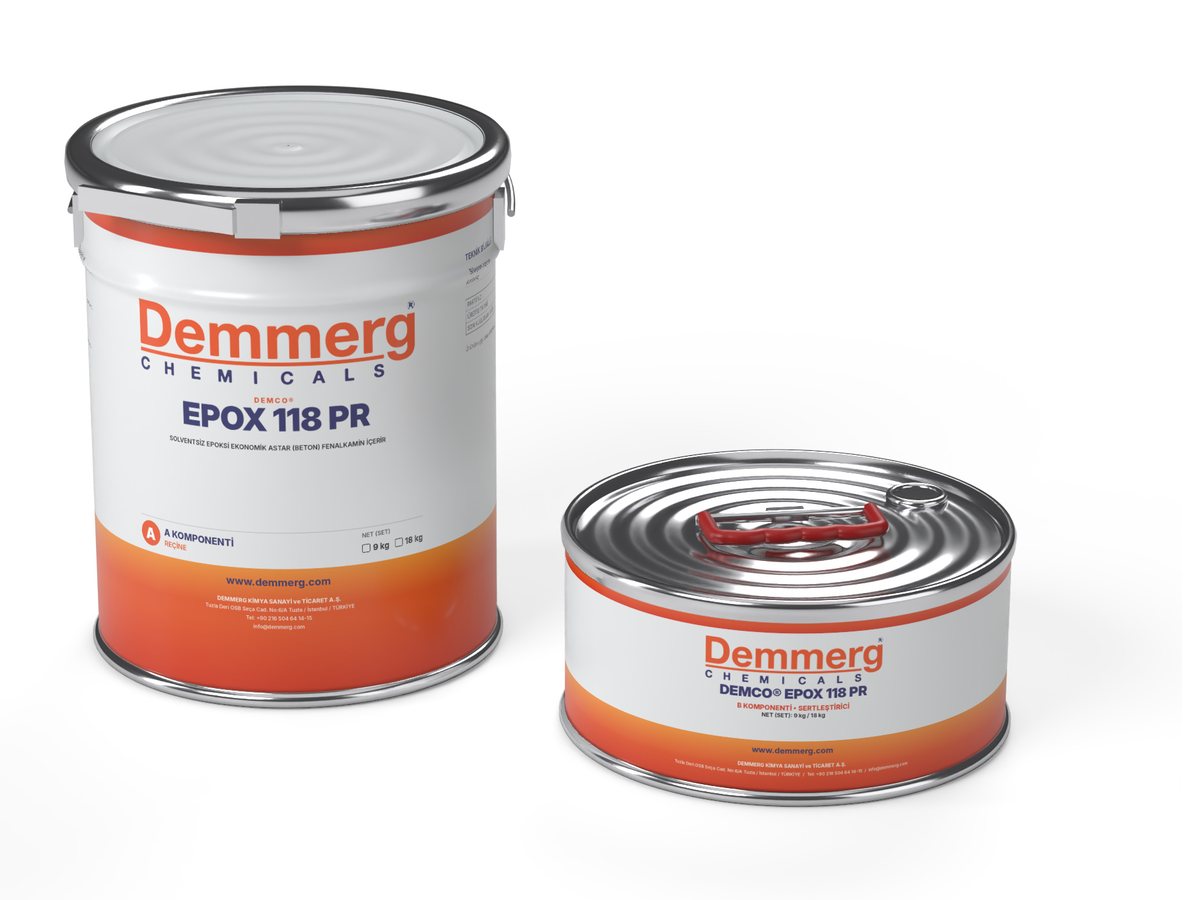
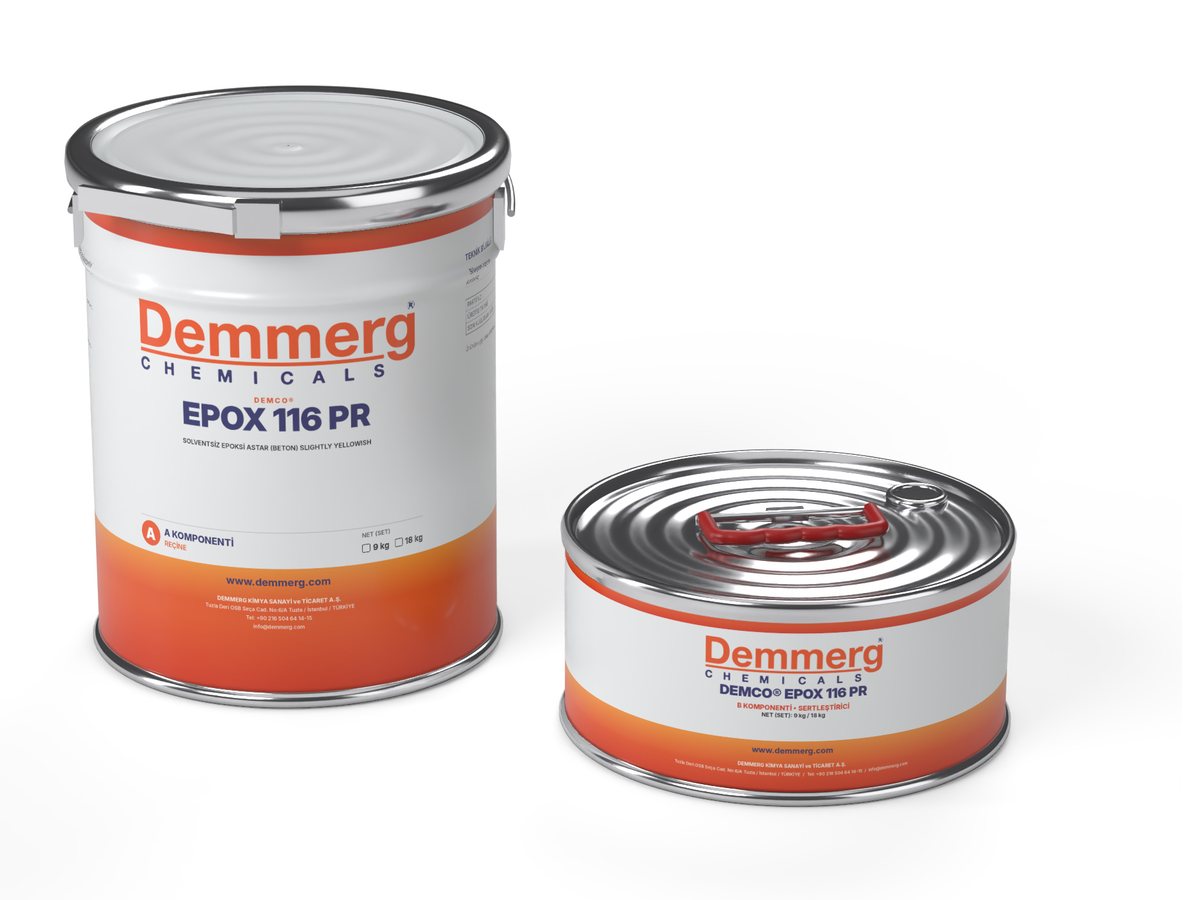
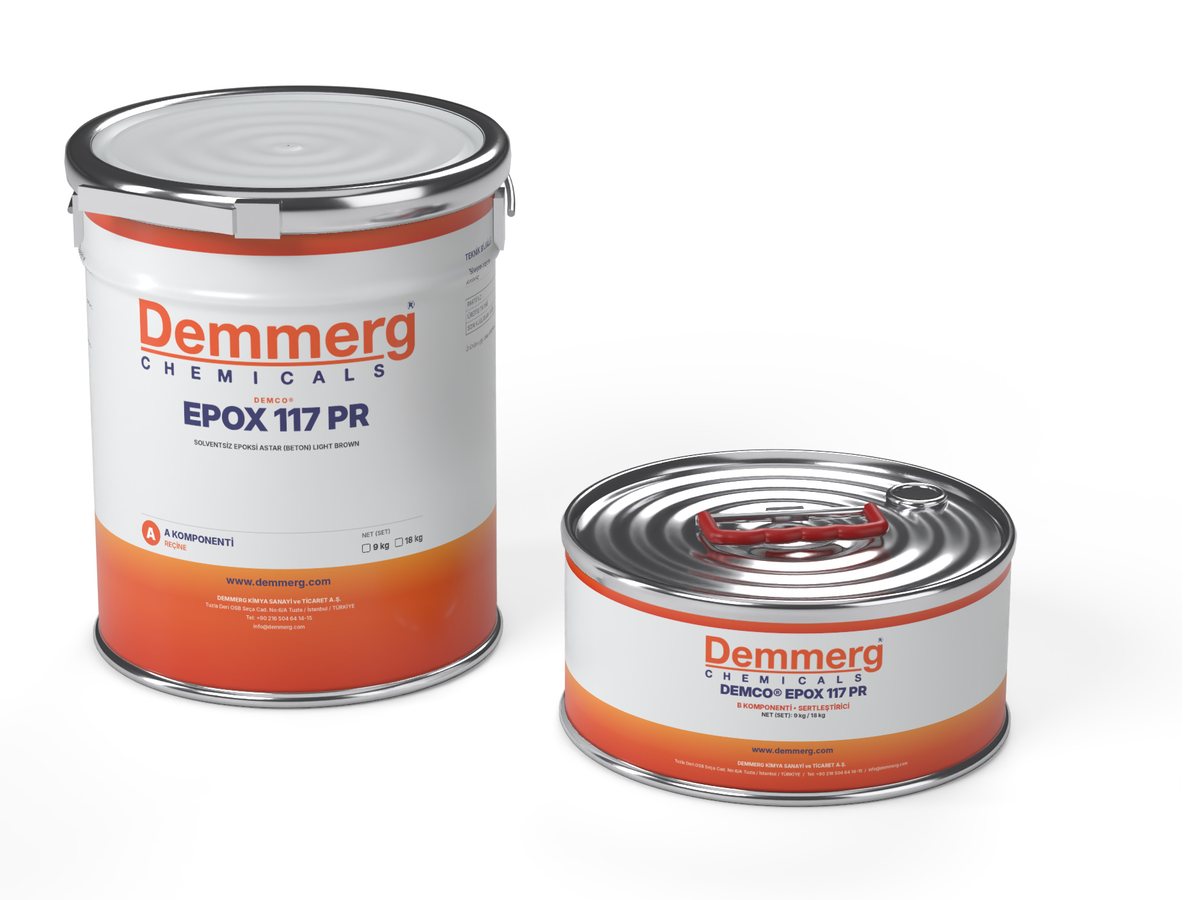
Quartz broadcast and quartz-filled primer coats:DEMCO EPOX 118 PR, DEMCO EPOX 115 PR, DEMCO EPOX 116 PR and DEMCO EPOX 117 PR are solvent-free epoxy primers that bond fillers broadcast onto them before full cure. 400 g/m² gives a 350–370 µm film. 115 PR and 118 PR are applied neat or mixed 1:1 with quartz; with 115, 116 and 117 PR the concrete is first impregnated with DEMCO EPOX 100 PR.
Filled primer and scratch coat:DEMCO EPOX 170 PR/F and DEMCO EPOX 172 PR/F are self-leveling filled primers that also serve as a scratch coat. Coverage is about 1.5 kg/m² (170 PR/F) and 1.7 kg/m² (172 PR/F) per mm; the concrete is preferably impregnated with DEMCO EPOX 100 PR first.
Floors exposed to acids, alkalis and solvents:DEMCO EPOX 125 PR/C is a solvent-free epoxy resin highly resistant to concentrated organic and inorganic acids, alkalis and solvents, applied over concrete impregnated with DEMCO EPOX 100 PR. Pot life 150–180 minutes, tack-free time 24–36 hours.
Vertical surfaces and stone carpet walls: thixotropic DEMCO EPOX 126 PR/TIX does not run or sag on vertical surfaces; it is designed especially for stone carpet walls, indoors and outdoors. With silica sand added it also works as a repair mortar; stone carpet coverage with a notched trowel is 0.75–1.25 kg/m².
For the right primer and quantity for your floor, request a quote.
Where are epoxy primers used?
Epoxy primers are used under epoxy, polyurethane and polyurea floor coatings, as a primer and binder in concrete repairs, and to impregnate concrete against abrasion, dusting and chemicals. Conductive primers sit under the floor systems of electronics production and assembly areas, operating theaters, hazardous dust and chemical environments and cleanrooms. For the coats on top, see epoxy self-leveling, epoxy flooring and polyurethane flooring.
The primer in the system, and coverage
The primer is the first coat of a floor system, followed where needed by a scratch coat, then the body coat and topcoat. Some systems prime in two steps: the concrete is impregnated with DEMCO EPOX 100 PR, then a quartz broadcast or filled primer goes on. Loose quartz is swept off after 24 hours; the scratch coat and topcoat follow once the surface has been worked.
Coverage depends on the porosity of the concrete and the film thickness: 0.100–0.500 kg/m² per coat for impregnating primers, 400 g/m² for quartz broadcast primers and 1.5–1.7 kg/m² per mm for filled primers. See the epoxy coverage guide to work out quantities.
Epoxy primer drying and recoat times
At 23 °C most solvent-free DEMCO epoxy primers are tack-free in 10–12 hours; full cure takes about 7 days at 20–25 °C. The next coat depends on what goes on top:
Epoxy on top: after 2–4 hours on DEMCO EPOX 100 PR, 105 PR, 112 PR, 114 PR – FAST and 173 PR/F. The 110 PR data sheet asks for the primer to reach touch-hardness before epoxy coats as well.
Polyurethane on top: wait until the primer is touch-hard, at least 12–24 hours at 15–30 °C.
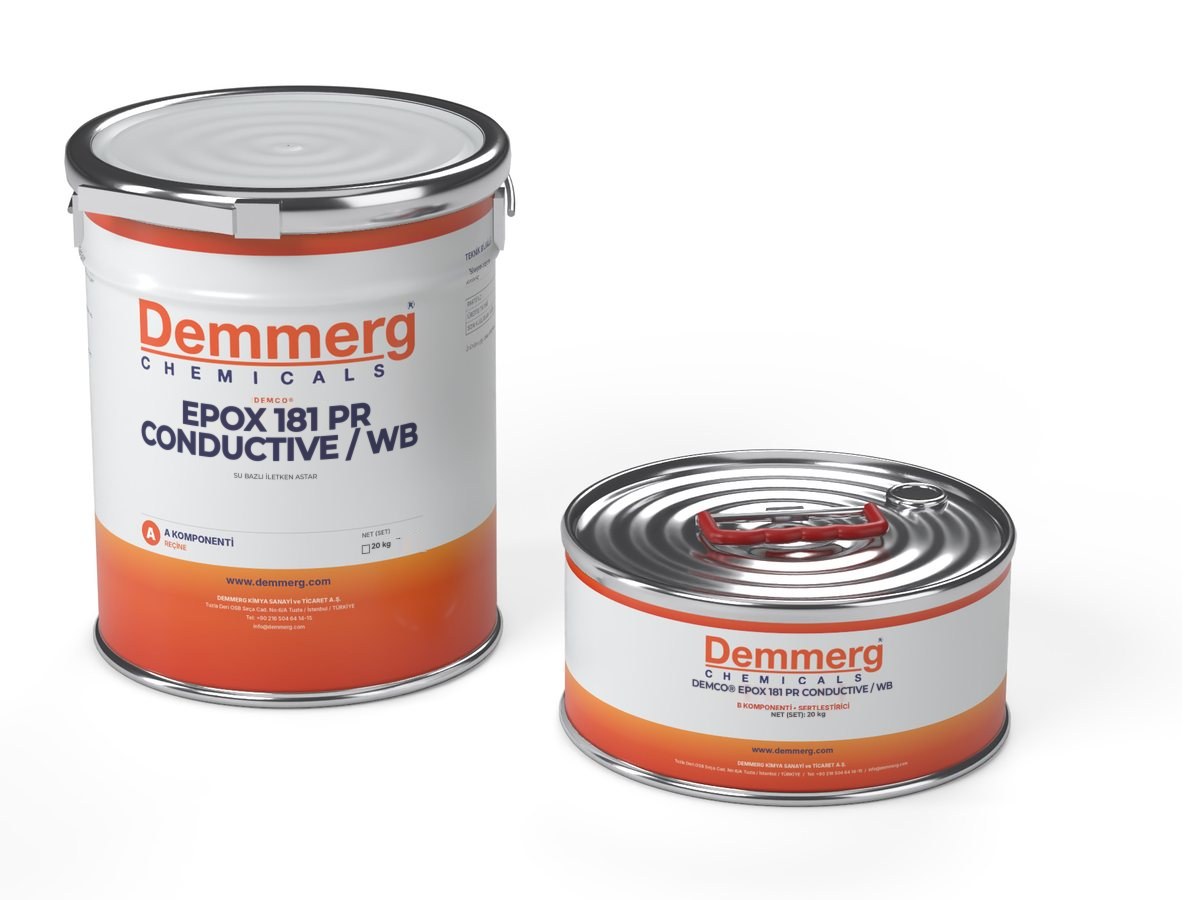
Shorter and longer times: DEMCO EPOX 181 PR CONDUCTIVE / WB is tack-free in 2 hours (next coat after 4–6 hours), 126 PR/TIX in about 4 hours and 180 PR/W in 7–10 hours (next coat after 5–7 hours); 125 PR/C takes 24–36 hours.
Surface preparation: remove oil, rust, dust and loose layers; roughen glossy surfaces by shot blasting, grinding or milling; repair cracks and holes with epoxy putty.
Temperature: ambient and floor temperature ideally 15–30 °C; the floor must never be below 10 °C.
Moisture: for standard primers the floor moisture must be below 4% and ambient humidity below 80%. If the slab is damp, choose a moisture-tolerant primer; see moisture in concrete for how to measure it.
Curing: keep the surface untouched and away from water for 24 hours after application.
Limits: DEMCO EPOX 181 PR CONDUCTIVE / WB is not used on floors affected by rising damp or where relative humidity exceeds 75%. DEMCO EPOX 126 PR/TIX is not applied to damp, wet or frozen substrates or to surfaces with negative water pressure.
It penetrates and seals the capillary pores of the concrete, stops dusting and raises the impact and chemical resistance of the surface. Its main job is to bond the coats that follow; DEMCO EPOX 100 PR has a pull-off bond strength above 2 N/mm².
How do you mix and apply an epoxy primer?
Pour all of component B into component A and mix at low speed for at least 3 minutes to avoid air bubbles; the primer is not thinned. Mix only as much as you can use within the pot life (20–40 minutes at 23 °C for DEMCO EPOX 100 PR) and apply it by brush or roller to the cleaned, roughened surface. See how to apply epoxy flooring for the order of coats.
How long does an epoxy primer take to dry?
At 23 °C most DEMCO epoxy primers are tack-free in 10–12 hours, the fast DEMCO EPOX 114 PR – FAST in 8–10 hours. Epoxy usually follows after 2–4 hours, polyurethane after at least 12–24 hours; full cure takes about 7 days.
Can an epoxy primer be applied to damp concrete?
Standard primers are for floors with moisture below 4%. On damp concrete, use the surface-tolerant moisture barriers DEMCO EPOX 110 PR, 112 PR, 114 PR – FAST or 173 PR/F.
What is the difference between solvent-free and water-based epoxy primers?
Solvent-free primers such as DEMCO EPOX 100 PR can be used comfortably indoors and penetrate concrete well. Water-based DEMCO EPOX 180 PR/W is odorless and can be used where ventilation is inadequate; solvent-based DEMCO EPOX 130 PR/S is tack-free in 40–70 minutes.
Can polyurethane be applied over an epoxy primer?
Yes. Wait until the primer is touch-hard, at least 12–24 hours at 15–30 °C. The moisture-tolerant 110 PR, 112 PR and 173 PR/F are also used under polyurea coatings.
With your consent we use Google Analytics and Google Ads cookies to measure how the site is used and how our ads perform, and to show our ads again to people who visited the site. If you decline, these cookies are not set and the site works the same. Privacy and cookies
 EN
 tr
 de
 fr
 es
 pt
 it
 nl
 ru
 uk
 pl
 ro
 bg
 el
 ar
 fa
 az
 tk
 uz
 kk
 he