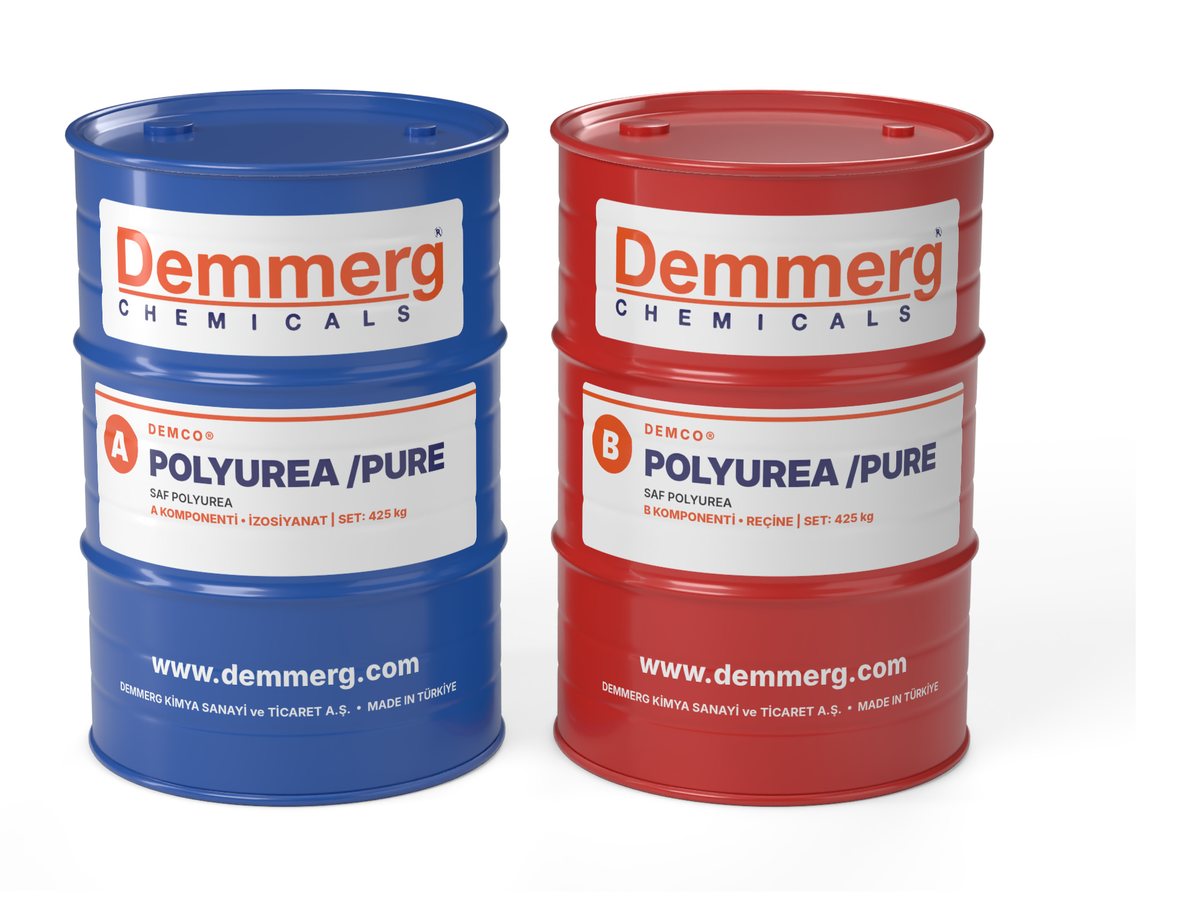
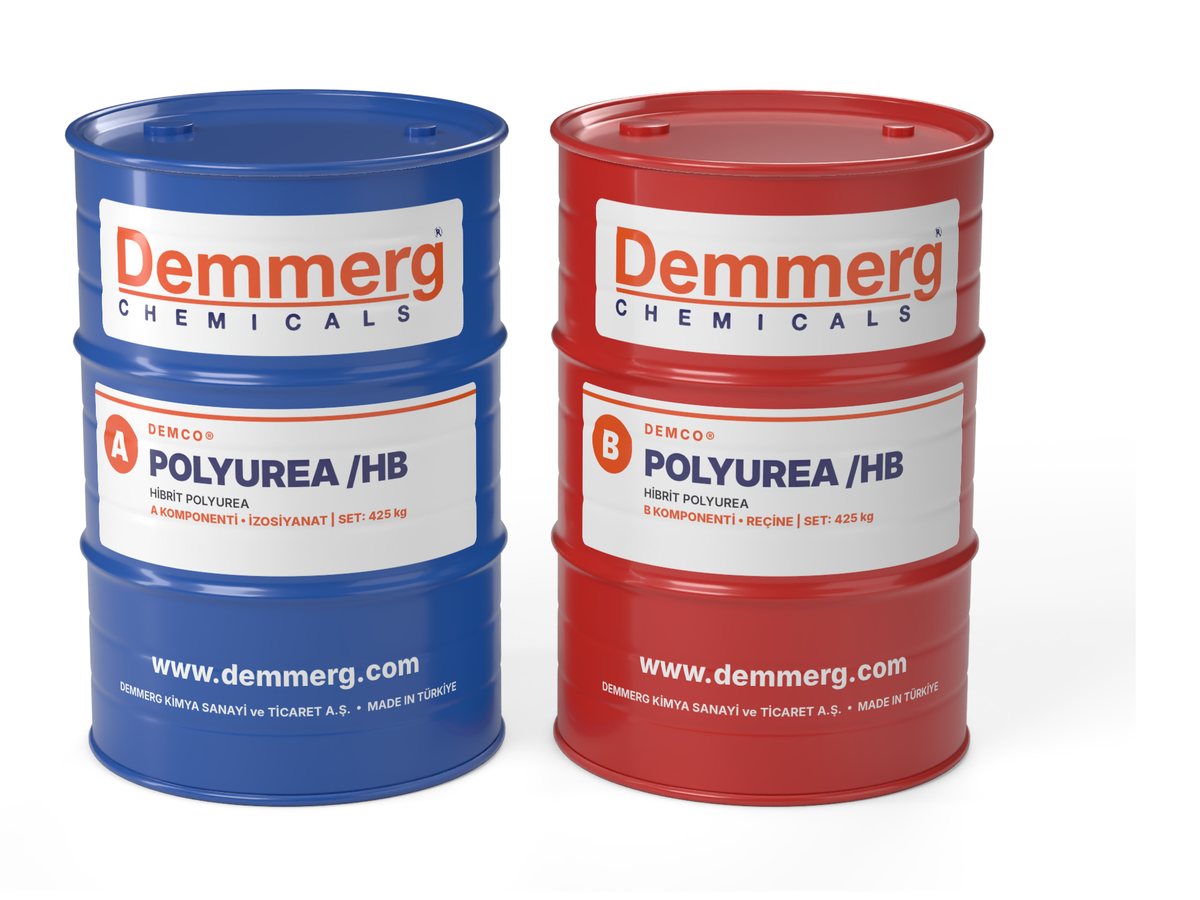
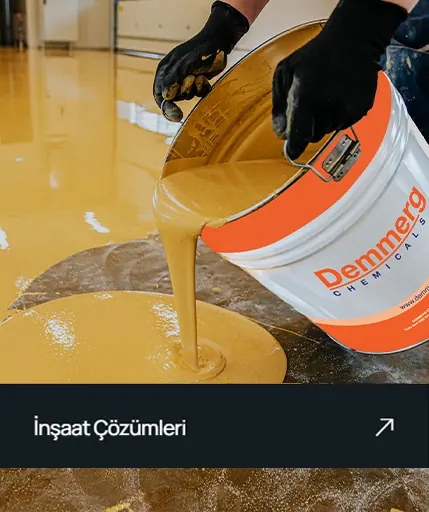
Polyurea coating is a seamless, flexible, waterproof protective layer formed when two components are sprayed hot and at high pressure with a dedicated machine and gel within seconds. It is used for waterproofing, roofs and terraces, parking structures, water tanks, industrial floors and steel surfaces; Demmerg manufactures the spray polyurea products DEMCO POLYUREA /PURE and DEMCO POLYUREA /HB.
Polyurea is an elastomeric coating formed by the reaction of an isocyanate component with an amine component. Because the reaction is so fast, it is not applied by roller or trowel but with heated-hose spray machines that mix the two components 1:1 by volume and spray them at high pressure. In DEMCO polyurea products the pot life is measured in seconds and the surface is touch-dry in 10–20 seconds.
Cured polyurea forms a tightly bonded, seamless, monolithic membrane. It isolates the surface from the environment, stops water and air from passing through, and resists abrasion, vibration and impact. It is highly flexible (elongation 405–435%) and offers high crack bridging.
Pure vs. hybrid polyurea
The industry divides polyureas into two types by the resin side that reacts with the isocyanate:
Pure polyurea: the isocyanate reacts with amine-terminated resins; the resin side contains no polyol.
Hybrid polyurea: the resin side contains polyols in addition to amines, so the coating also contains polyurethane linkages.
In general, pure polyurea is less sensitive to moisture and temperature during application and has higher moisture and chemical resistance; hybrid systems cost less but usually offer lower resistance. These differences vary by product, so decide on data sheet values, not the general rule.
In our specifications, the pure polyurea system is defined with DEMCO POLYUREA /PURE and the hybrid polyurea system with DEMCO POLYUREA /HB. The DEMCO POLYUREA /PURE data sheet also describes it as a plasticizer-free pure polyurea system.
The DEMCO polyurea system
DEMCO POLYUREA /PURE: 100% solids, zero-VOC, odorless, aromatic spray polyurea. Elongation 405 ± 25% (DIN 53504), hardness Shore D 45 ± 5 (ASTM D 2240), tensile strength 18 ± 2 MPa, tear resistance 95 N/mm; pull-off adhesion about 2.9 N/mm² (EN 1542). Pot life 2–4 s, touch-dry in 15–20 s, recoat time 6 hours. Provides high crack bridging and can coat carbon and mild steel without a primer.
DEMCO POLYUREA /HB: 100% solids (solvent-free), aromatic, odorless and tintable spray polyurea for metal, concrete, wood and other recommended substrates. Elongation 435 ± 25% (DIN 53504), hardness Shore D 45 ± 5 (ASTM D 2240), tensile strength 18 ± 3 MPa, tear resistance 90 ± 15 N/mm. Pot life 5–10 s, touch-dry in 10–15 s, recoat time 1 hour.
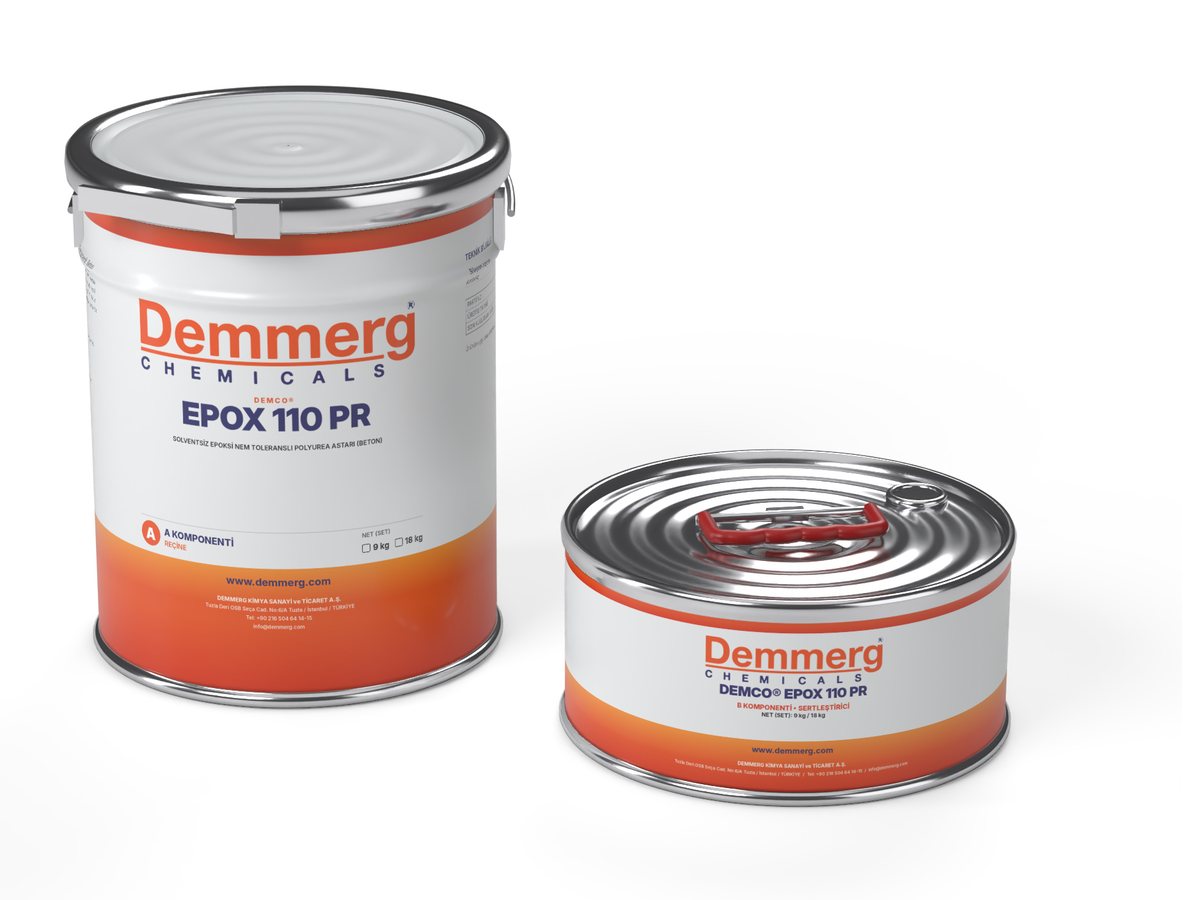
DEMCO EPOX 110 PR: solvent-free, low-viscosity, surface-tolerant epoxy primer and moisture barrier for concrete and cementitious substrates. Its data sheet lists it as a primer under epoxy, polyurethane and polyurea coatings; applied by brush or roller.
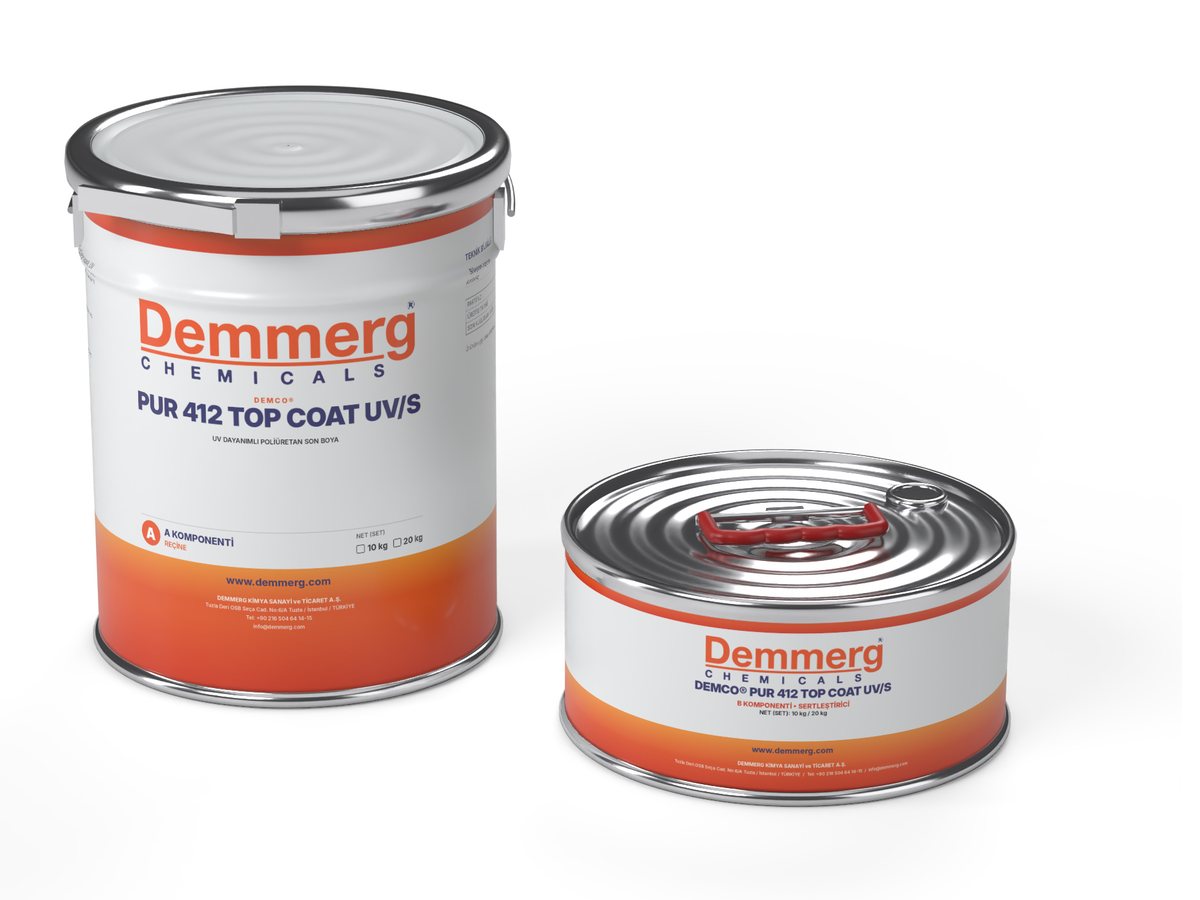
DEMCO PUR 412 TOP COAT UV: two-component, solvent-based, UV-resistant polyurethane topcoat. According to its data sheet it can be applied over polyurea coatings; it does not dull or chalk.
Both polyurea products are tested to EN 1504-2 within the scope of the CE certificate.
Layers and coverage
Surface preparation: dust, dirt, oil, release agents, curing compounds and weak material are removed by milling, water jetting or blasting, and the surface is vacuumed with industrial vacuum equipment. Coating performance and adhesion depend directly on surface preparation.
Primer: concrete is primed with DEMCO EPOX 110 PR; very absorbent concrete may need two coats. On a properly prepared and primed substrate, DEMCO POLYUREA /PURE does not form gas bubbles.
Polyurea coat: sprayed to the required thickness; theoretical coverage is 1.1 kg/m² per 1 mm. The figure is theoretical; surface roughness and application losses must be added.
UV topcoat (where needed): the DEMCO POLYUREA /HB data sheet recommends a single coat of aliphatic polyurethane topcoat over the polyurea in areas permanently exposed to UV. The UV-resistant topcoat DEMCO PUR 412 TOP COAT UV gives a 45–50 µm dry film at 0.150–0.200 kg/m² per coat.
Where is polyurea used?
Main application areas listed in the data sheets:
Waterproofing and flexible protection: roofs, terraces, balconies, walkways and underground structures
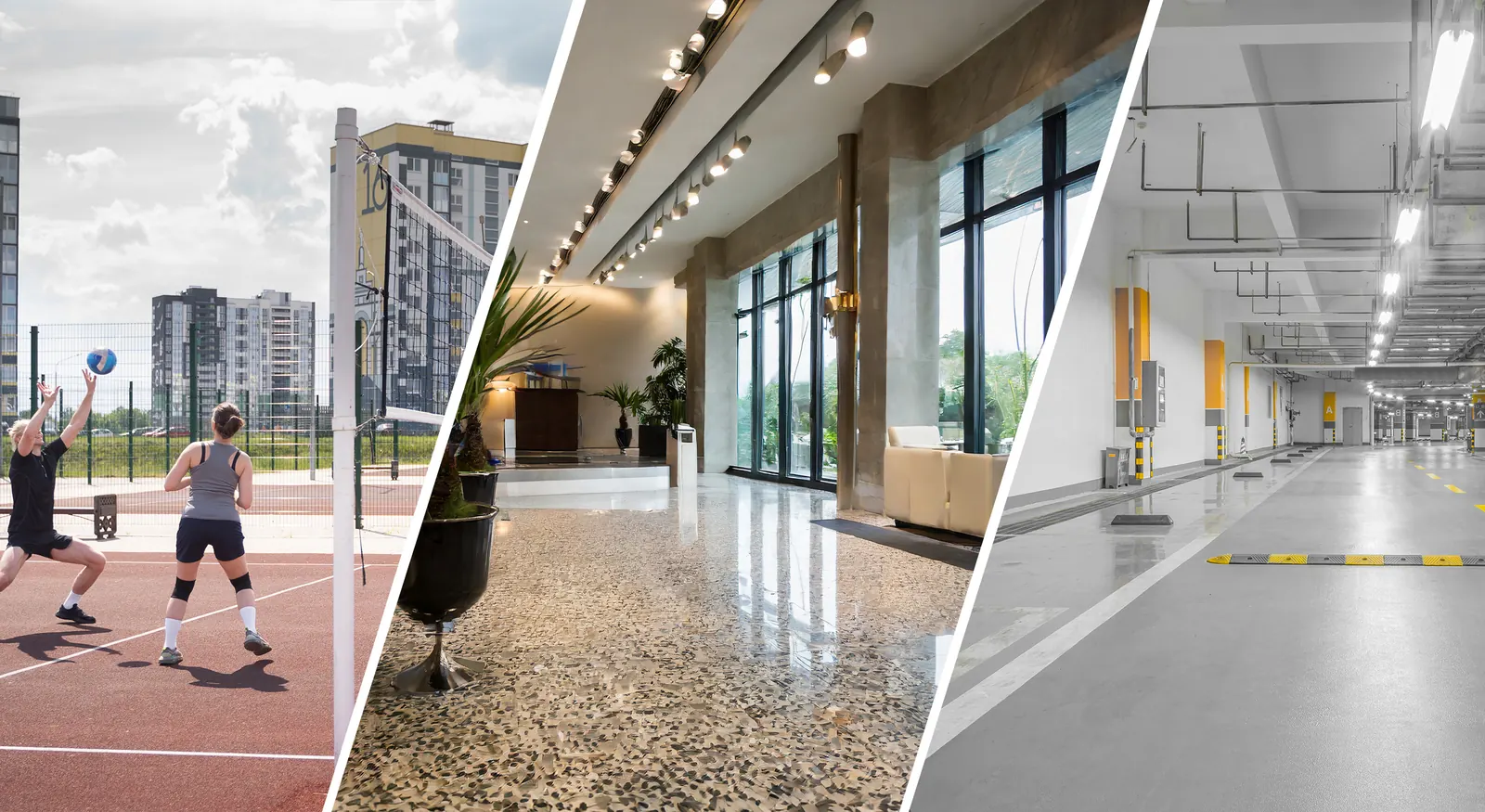
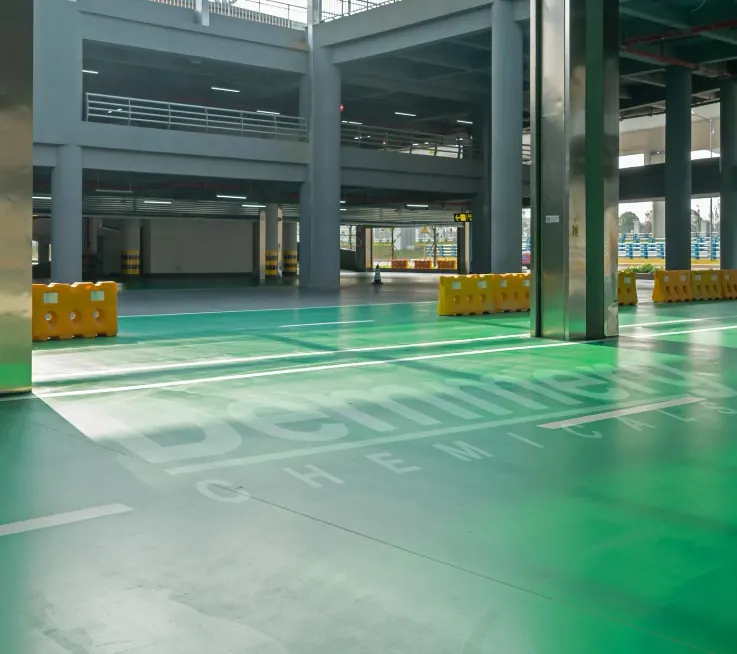
Parking structures: parking decks and parking garage roofs (on parking floors with a suitable topcoat, according to the DEMCO POLYUREA /HB data sheet)
Structures in contact with water: pools, water tanks, water and wastewater treatment plants
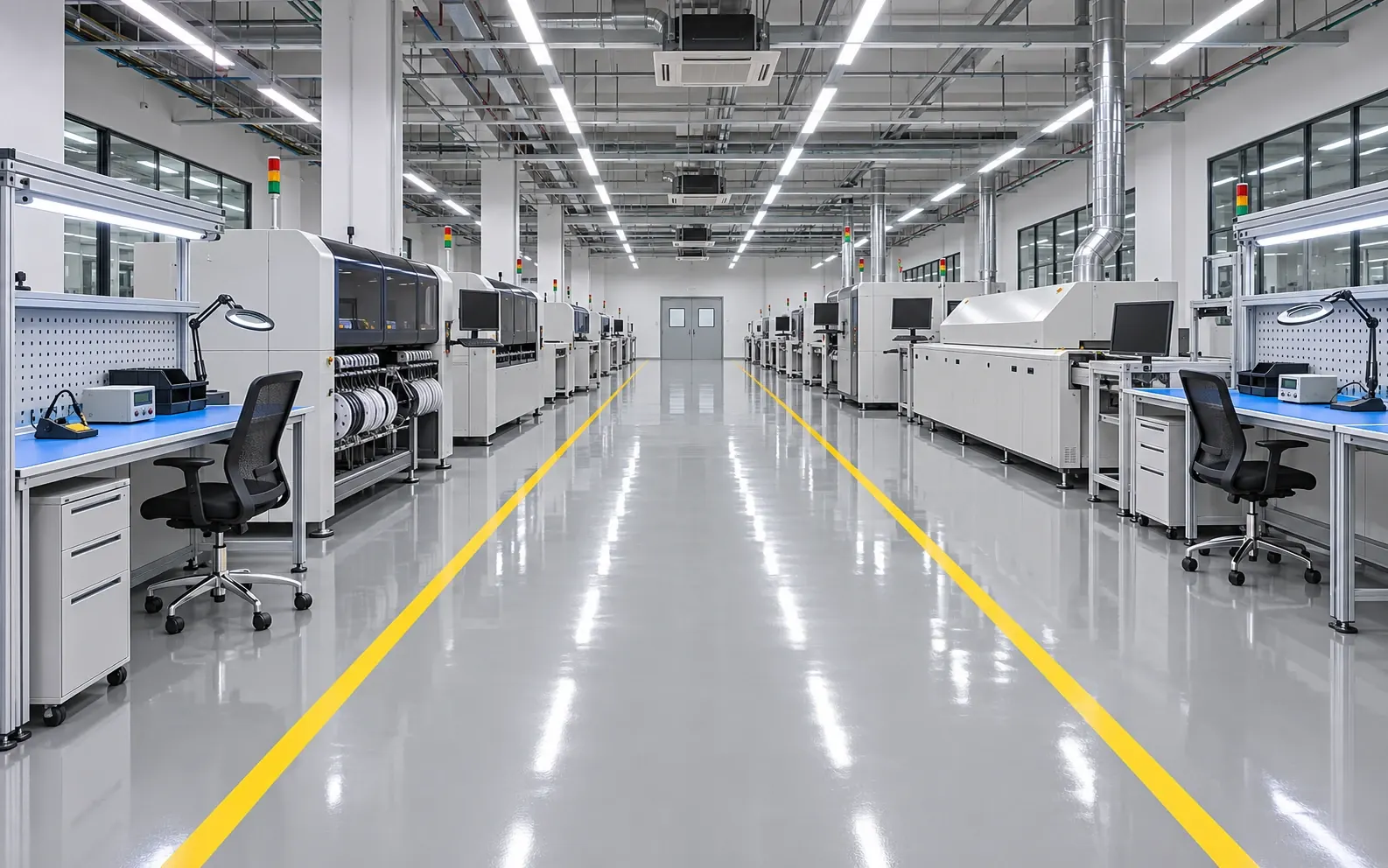
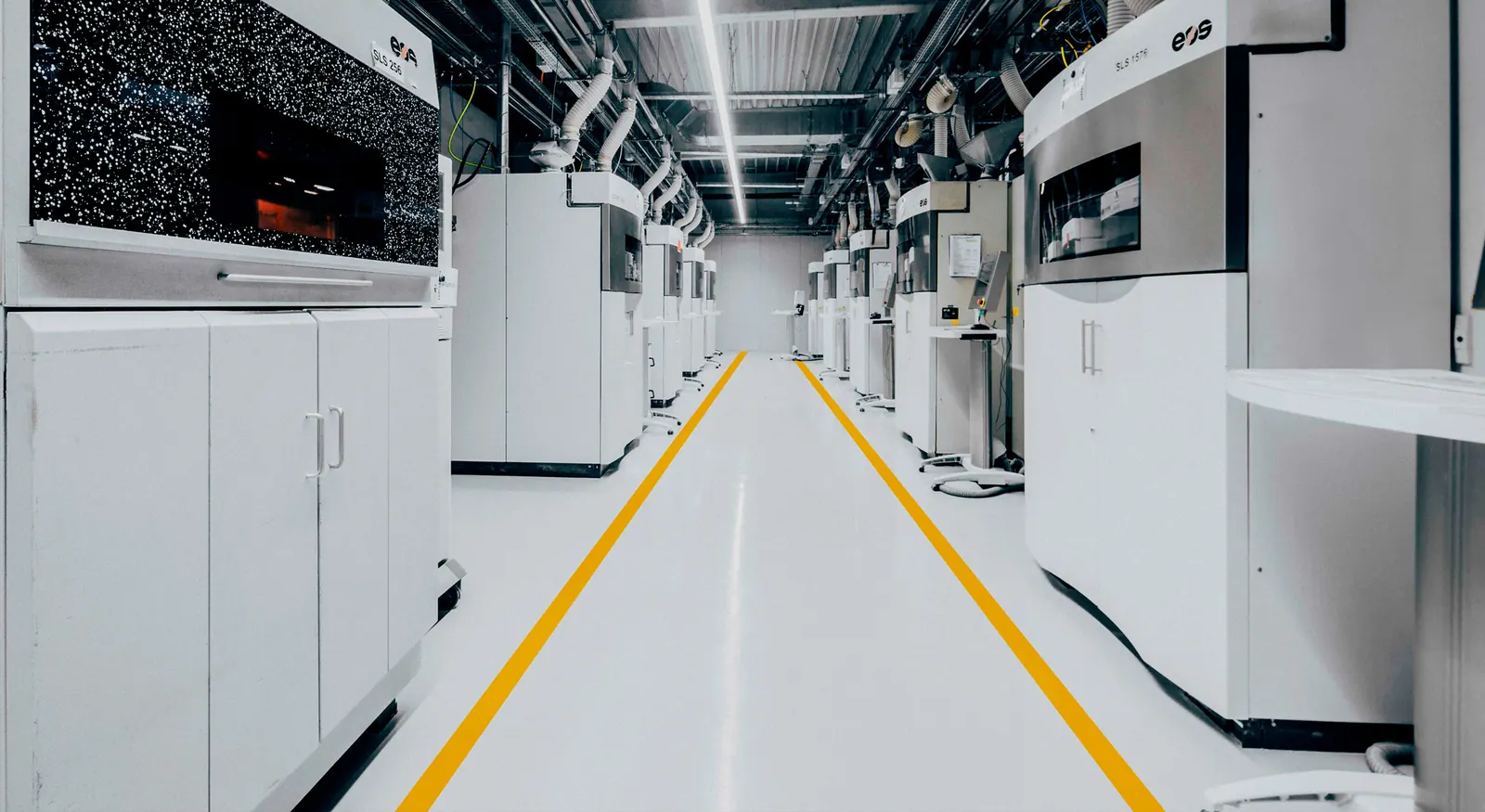
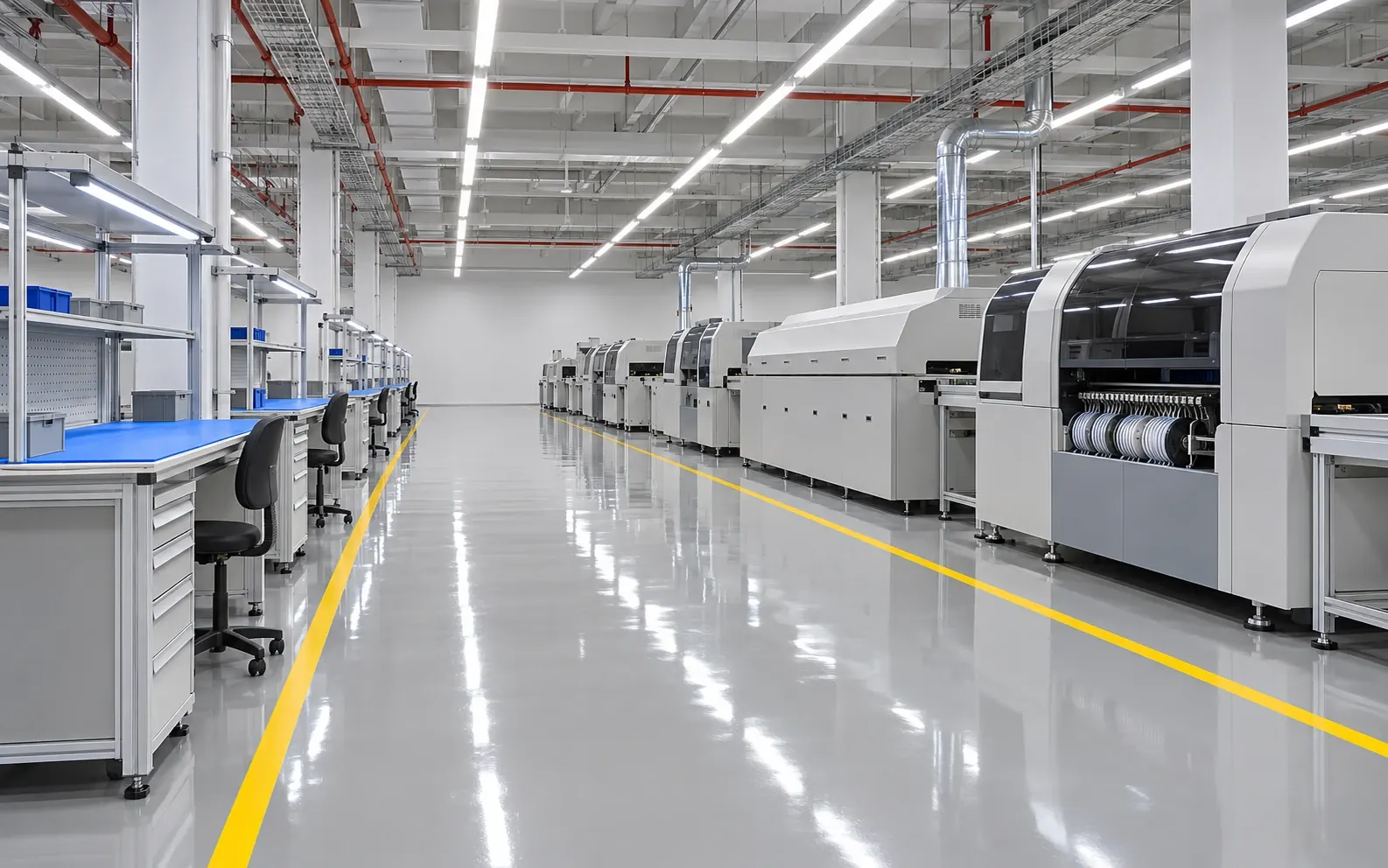
Industrial floors: warehouse floors, cold storage facilities, food processing plants, pulp and paper mills
Heavy industry and infrastructure: refineries, power plants, fertilizer plants, mining operations, airports, marine environments and shipyards, structural steel; the DEMCO POLYUREA /HB data sheet also lists oil and gas pipelines
Equipment: according to the DEMCO POLYUREA /HB data sheet, components A and B are sprayed at a minimum of 2000 psi and 65 °C, and pressure and temperature are kept constant throughout. Bringing the components to 25 °C before application is recommended.
Substrate: surface moisture must not exceed 4%; the substrate should have an average pull-off strength of 1.5 N/mm² and a compressive strength of at least 25 N/mm². See moisture in concrete for measurement.
Temperature: polyurea can be applied at ambient temperatures down to -30 °C, but DEMCO EPOX 110 PR, used on concrete, needs an ideal working and substrate temperature of 15–30 °C and never below 10 °C. In cold weather the primer sets the limit.
Protection: freshly coated surfaces are protected from water, dew and dust for at least 24 hours.
Storage: shelf life is 6 months from the production date; drums are stored above 15 °C and out of direct sunlight.
Choosing the right system
On roofs, terraces, balconies and open parking decks exposed to sunlight, plan a UV-resistant topcoat over the polyurea.
If you need a self-leveling elastic floor applied by roller or trowel rather than by spray, see our polyurethane floor coatings.
To choose between pure and hybrid systems and to set the thickness, tell us about the loads, water and chemical exposure, and UV conditions, and request a quote.
Frequently asked questions
What is polyurea coating used for?
It covers a surface with a seamless, flexible membrane that stops water and air from passing through and protects against abrasion, vibration and impact. It is used to waterproof roofs, terraces, parking structures, water tanks and underground structures, on industrial floors and to protect steel.
What is the difference between pure and hybrid polyurea?
Pure polyurea is made with amine-terminated resins, while hybrid polyurea uses a resin side that also contains polyols. In the industry, pure systems are considered more resistant to moisture and chemicals and hybrids more economical; in our specifications the pure system is defined with DEMCO POLYUREA /PURE and the hybrid system with DEMCO POLYUREA /HB.
How long does polyurea last?
Our data sheets do not state a service life for the coating; the 6-month figure in the data sheet is the shelf life of the material in unopened packaging. Service life on site depends on thickness, the quality of surface preparation and adhesion, UV exposure and whether a topcoat is used, mechanical and chemical loads, and maintenance.
Is polyurea safe?
DEMCO POLYUREA /PURE and /HB are 100% solids, solvent-free and odorless; the /PURE data sheet states zero VOC and the /HB data sheet states suitability for hygienic environments. During application the components irritate skin and eyes, so applicators wear protective clothing, goggles, gloves and shoes. The UV topcoat DEMCO PUR 412 TOP COAT UV is solvent-based; confirm uses that require certification, such as direct contact with drinking water or food, with our technical team.
How fast does polyurea cure, and at what temperature can it be applied?
DEMCO POLYUREA /PURE is touch-dry in 15–20 seconds and /HB in 10–15 seconds; recoat times are 6 hours and 1 hour respectively. The material can be applied down to -30 °C, but the substrate must not be below 10 °C for the primer on concrete.
What does the cost of a polyurea coating depend on?
Thickness is the main factor: each 1 mm needs a theoretical 1.1 kg/m² of polyurea. Surface preparation, the number of primer coats, the need for a UV topcoat and the size of the area also affect the cost. See floor coating cost per m² or request a quote for your project.
With your consent we use Google Analytics and Google Ads cookies to measure how the site is used and how our ads perform, and to show our ads again to people who visited the site. If you decline, these cookies are not set and the site works the same. Privacy and cookies
 EN
 tr
 de
 fr
 es
 pt
 it
 nl
 ru
 uk
 pl
 ro
 bg
 el
 ar
 fa
 az
 tk
 uz
 kk
 he