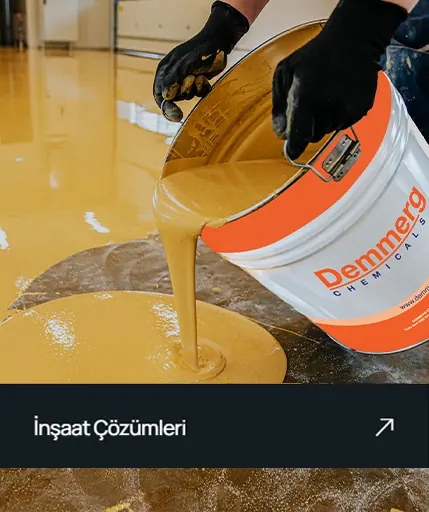
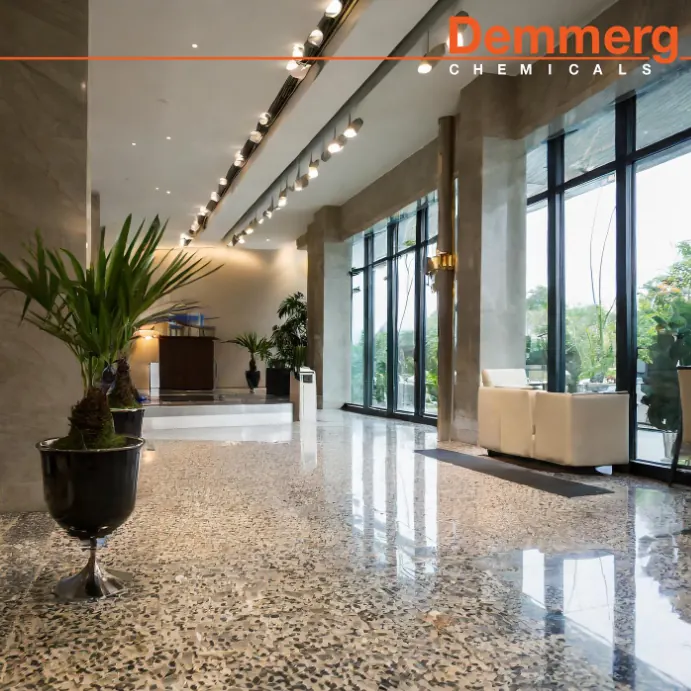
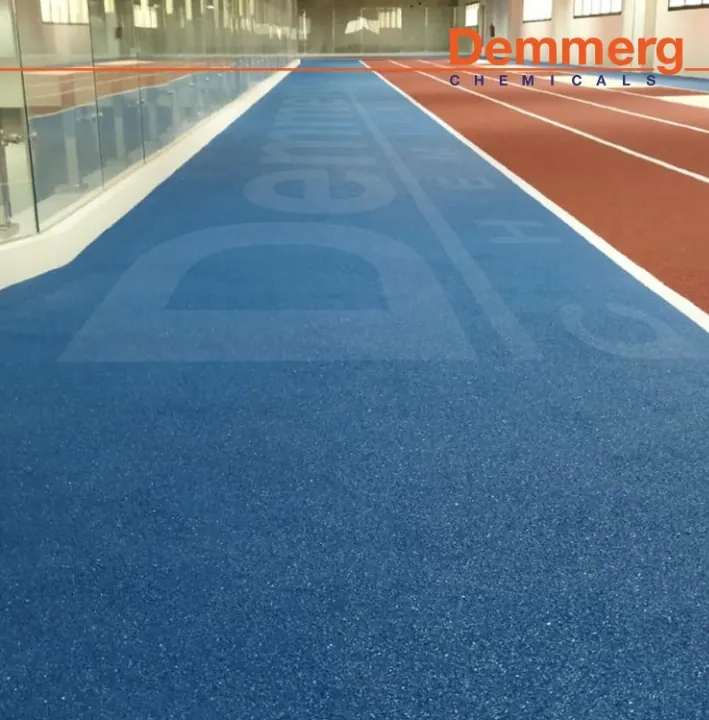
Self-leveling epoxy is a two-component, solvent-free epoxy floor coating that is poured onto primed concrete and spreads by itself into a seamless, smooth surface. It is applied in millimeters: with DEMCO EPOX 2000 SELF, 1.6 kg/m² in a single application gives a 1 mm dry film. Demmerg manufactures DEMCO self-leveling epoxy floor coatings and the primers used beneath them.
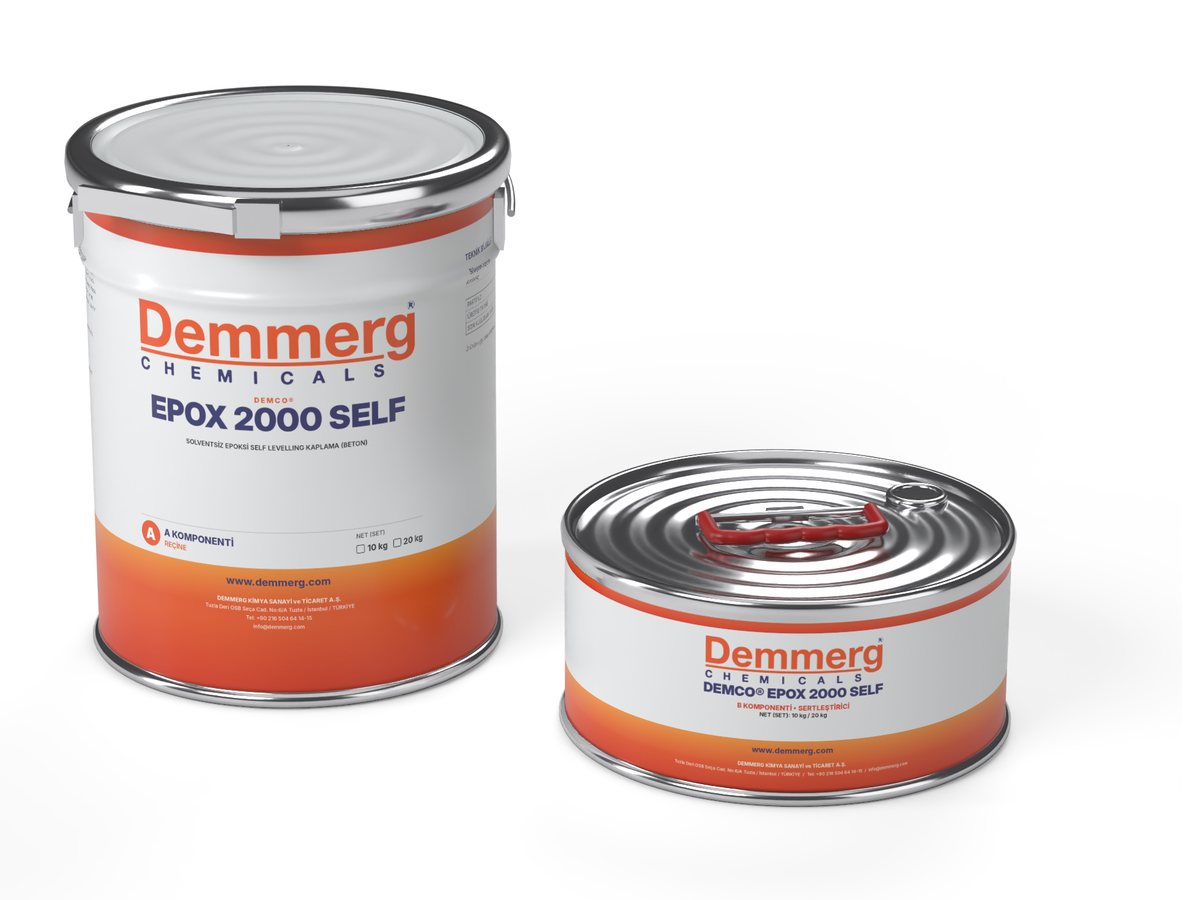
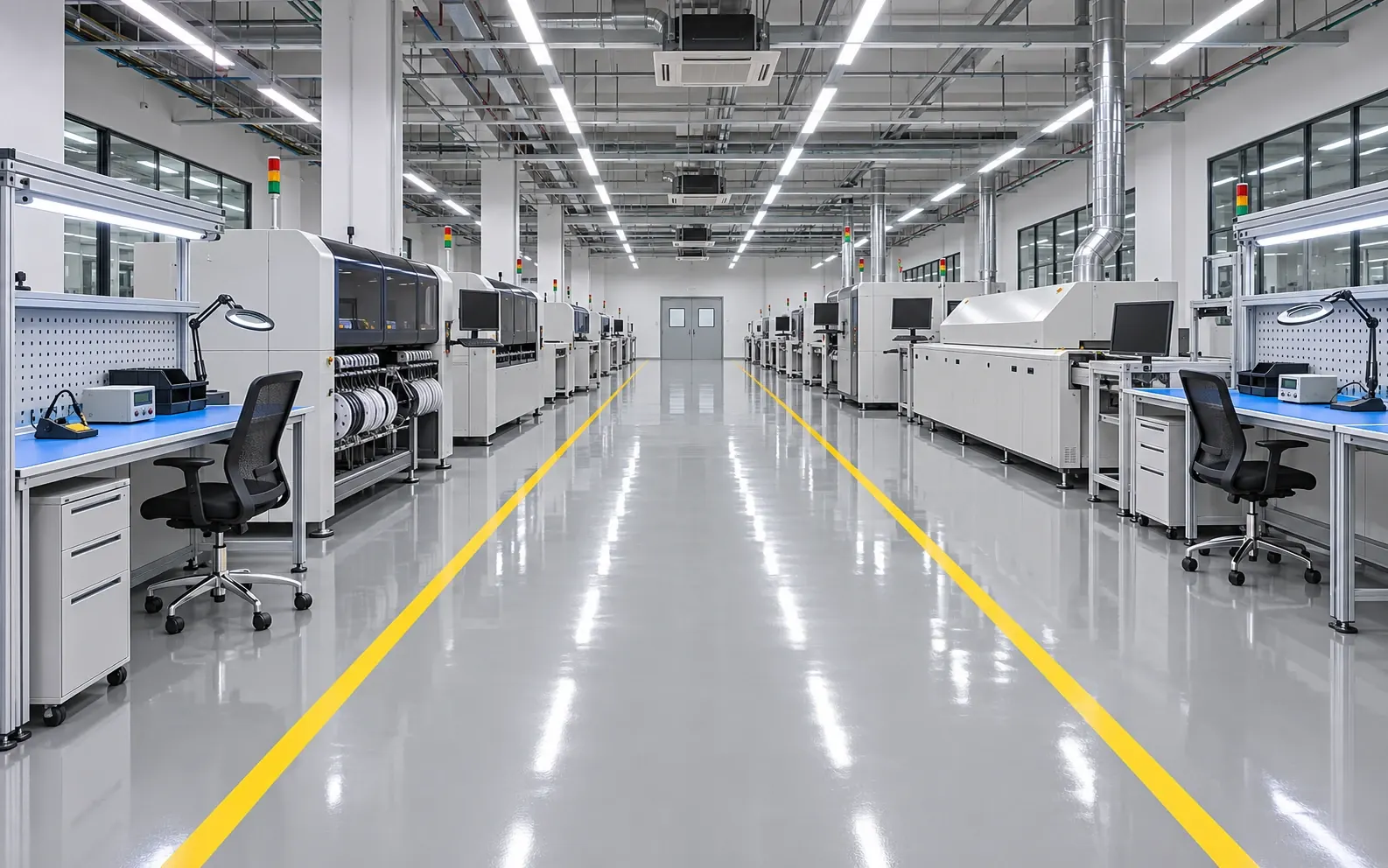
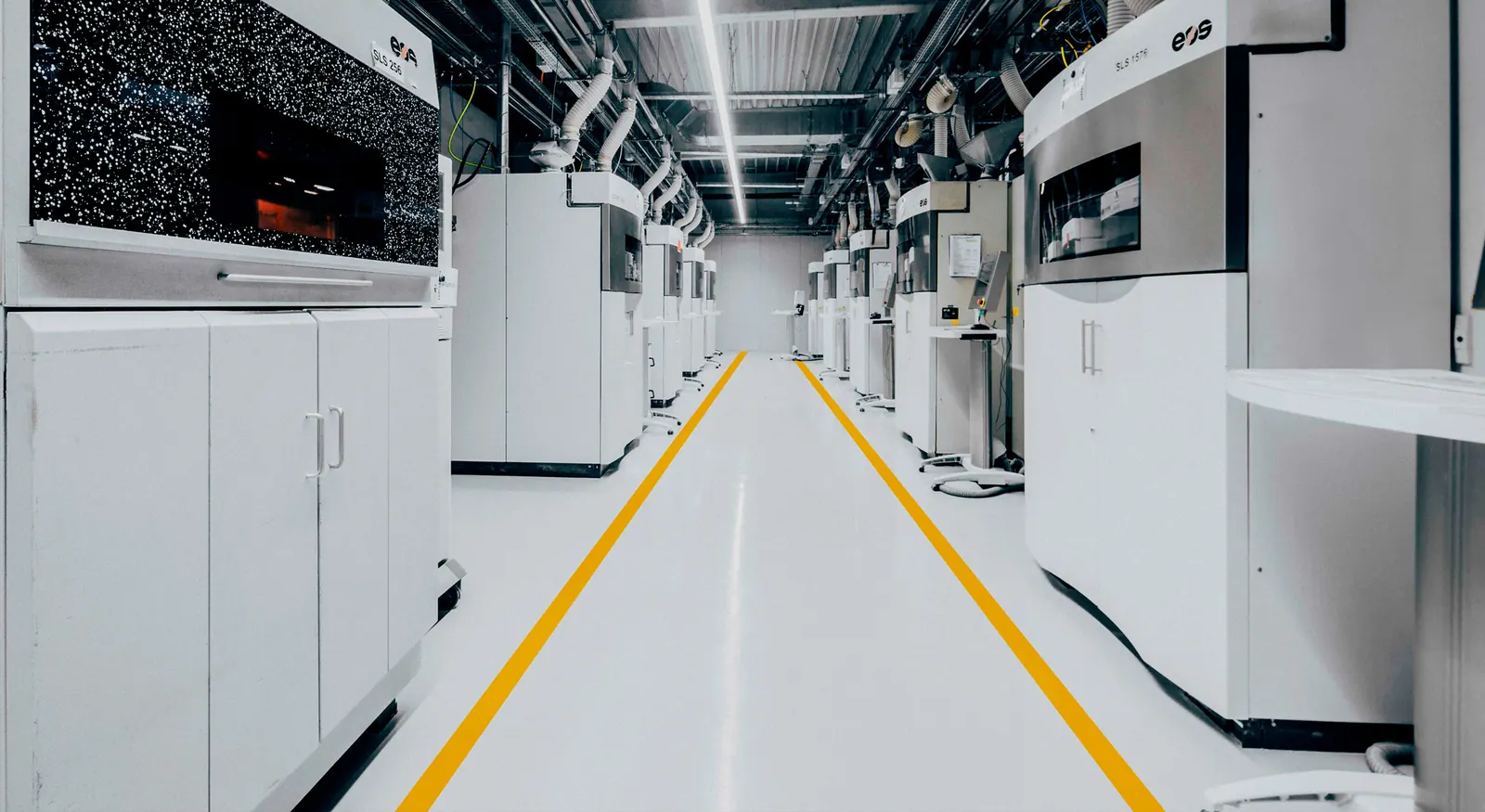
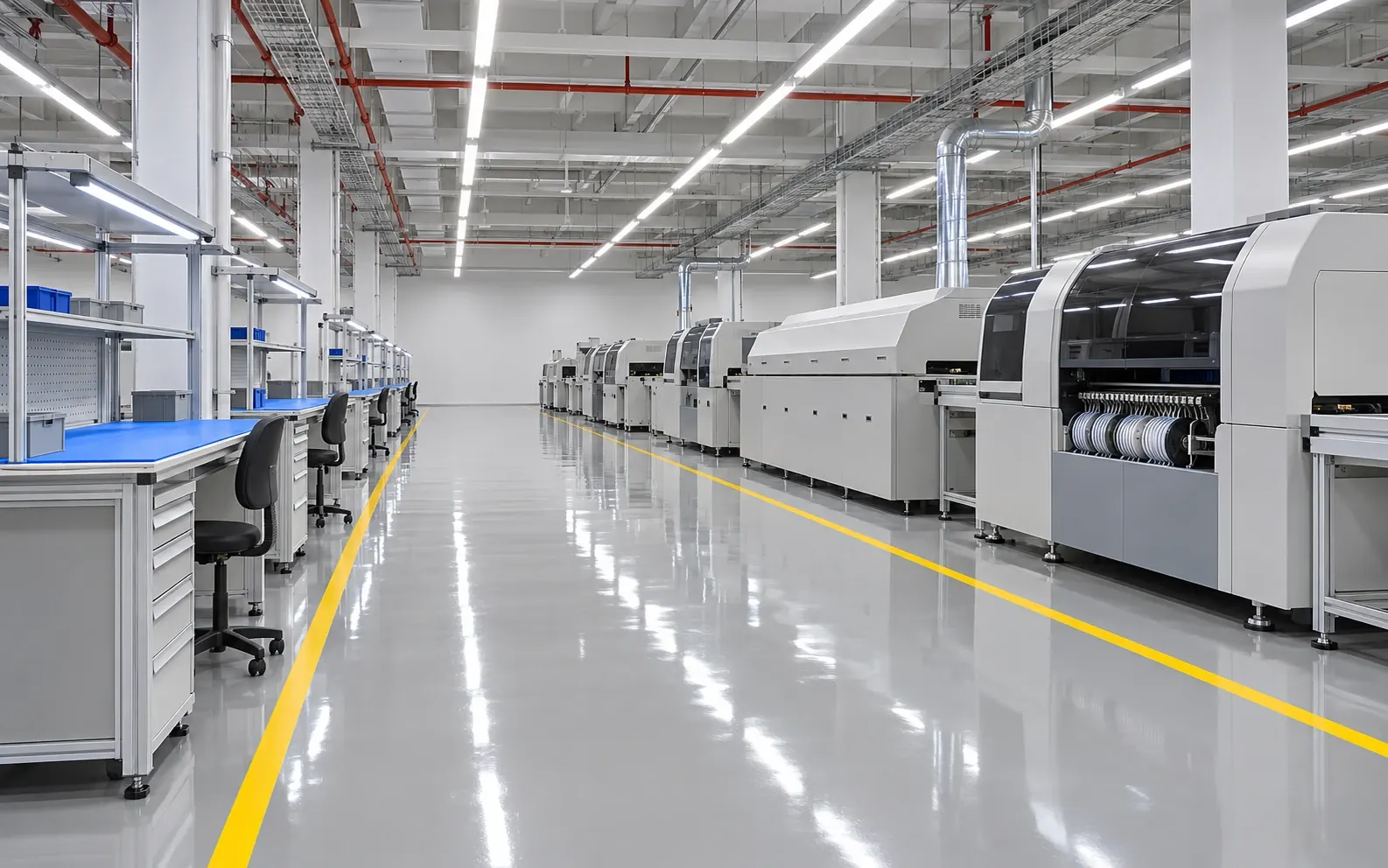
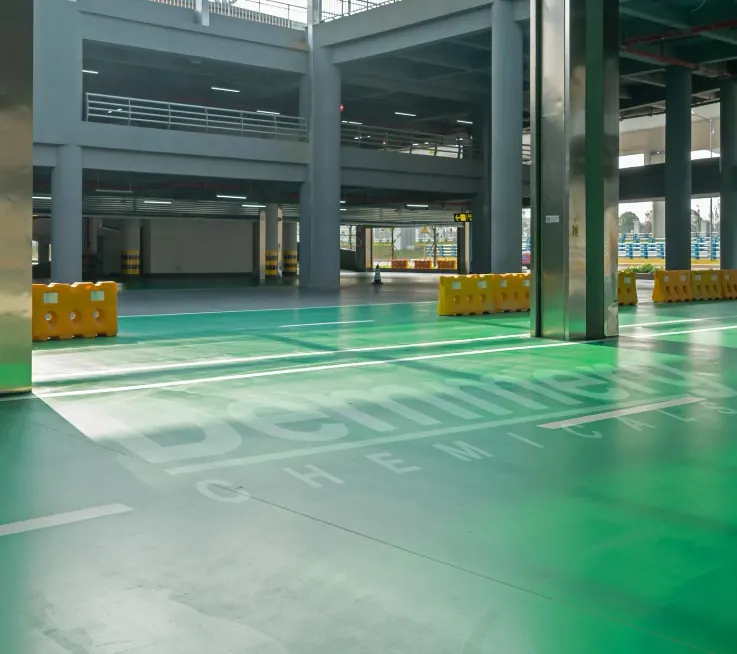
DEMCO EPOX 2000 SELF, standard: smooth main coat for floors under medium to heavy mechanical and chemical loads; quartz can be added to the mix if required. Compressive strength 50 N/mm², Shore D hardness about 76, pull-off adhesion ≥ 1.5 N/mm² (TS EN 1542); tested to EN 1504-2 within the scope of the CE certificate. Used in warehouses, laboratories, hospitals, schools, shopping centers, aircraft hangars, the electronics industry and car parks.
DEMCO EPOX 2004 SELF/FAST, fast-curing: can be opened to traffic within 5–6 hours at 20–23 °C ambient and substrate temperature. Pot life is 13–20 minutes, so it has to be laid quickly.
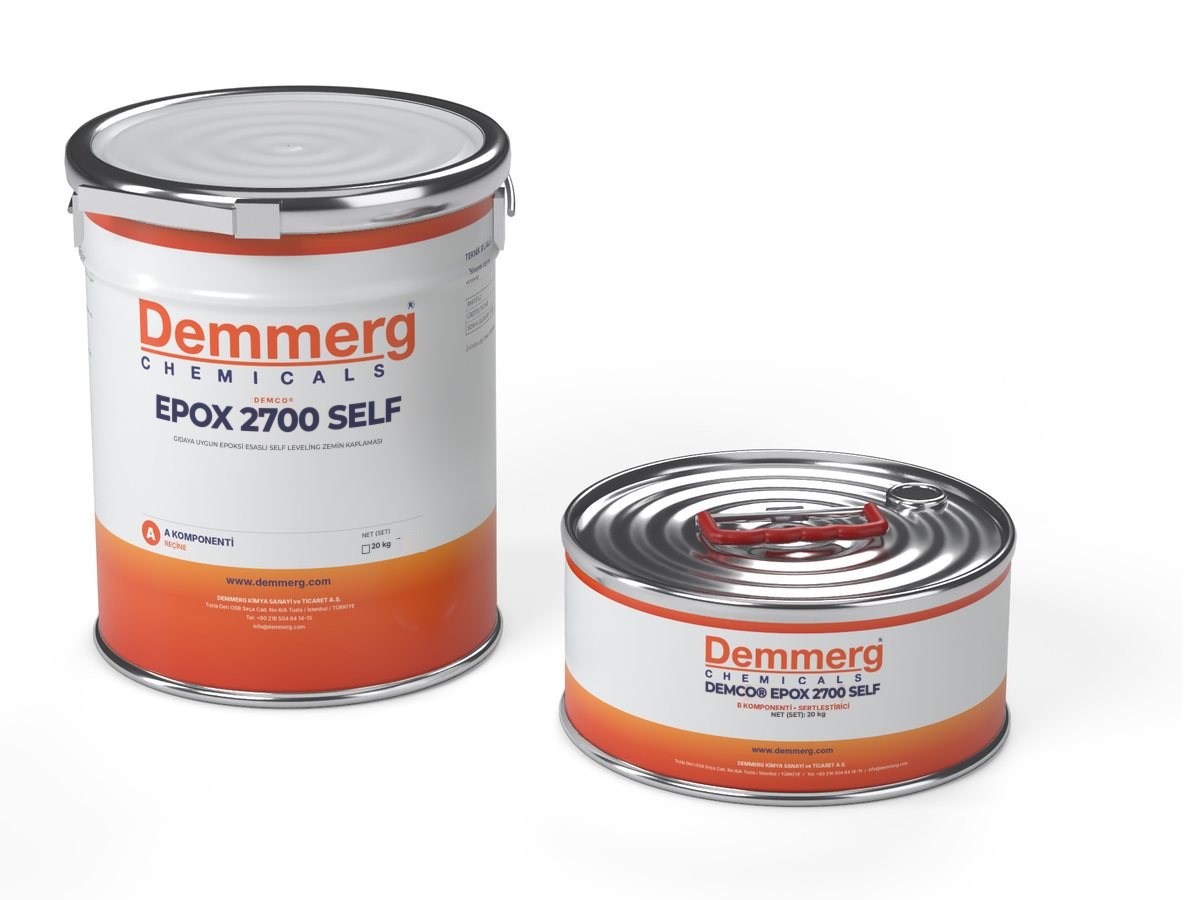
DEMCO EPOX 2700 SELF, food contact: meets the legal overall migration limits of EU 10/2011 and the Turkish regulation TGK 2019/44 in tests to EN 1186; pull-off adhesion ≥ 4 N/mm². For food processing and packaging plants, pharmaceutical plants and sterile production areas.
DEMCO EPOX 1900 SELF/C, chemical-resistant: for floors exposed to high concentrations of organic and inorganic acids, alkalis, solvents and heavy chemicals; applied at 1.6–1.8 kg/m² per mm.
DEMCO EPOX 2001 SELF/MID COAT, intermediate and scratch coat: a filled epoxy that levels itself, raises impact and chemical resistance and bonds the next coat; about 1.7 kg/m² per mm.
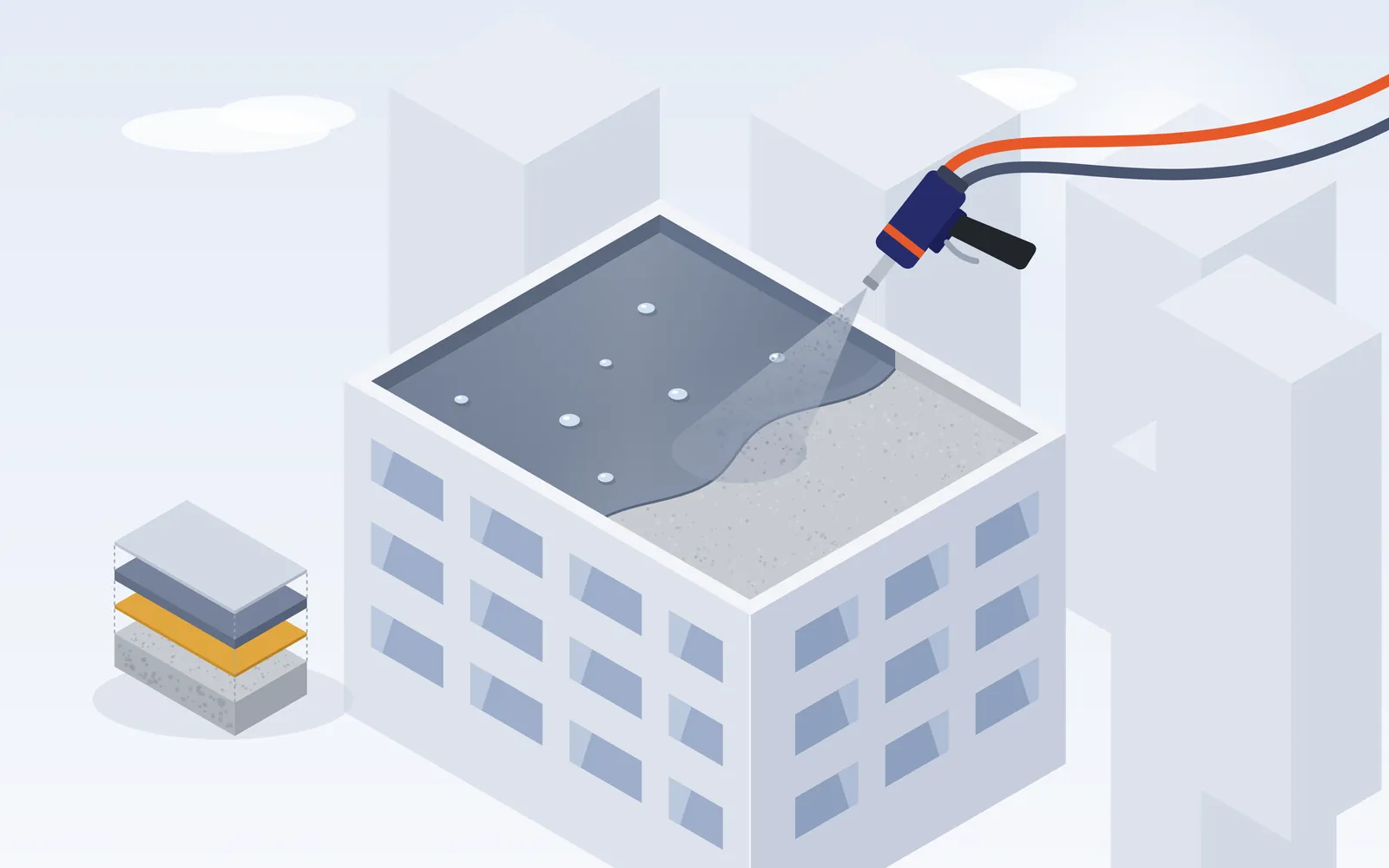
A self-leveling epoxy floor is built as a system of compatible layers, and each data sheet names the primer to use.
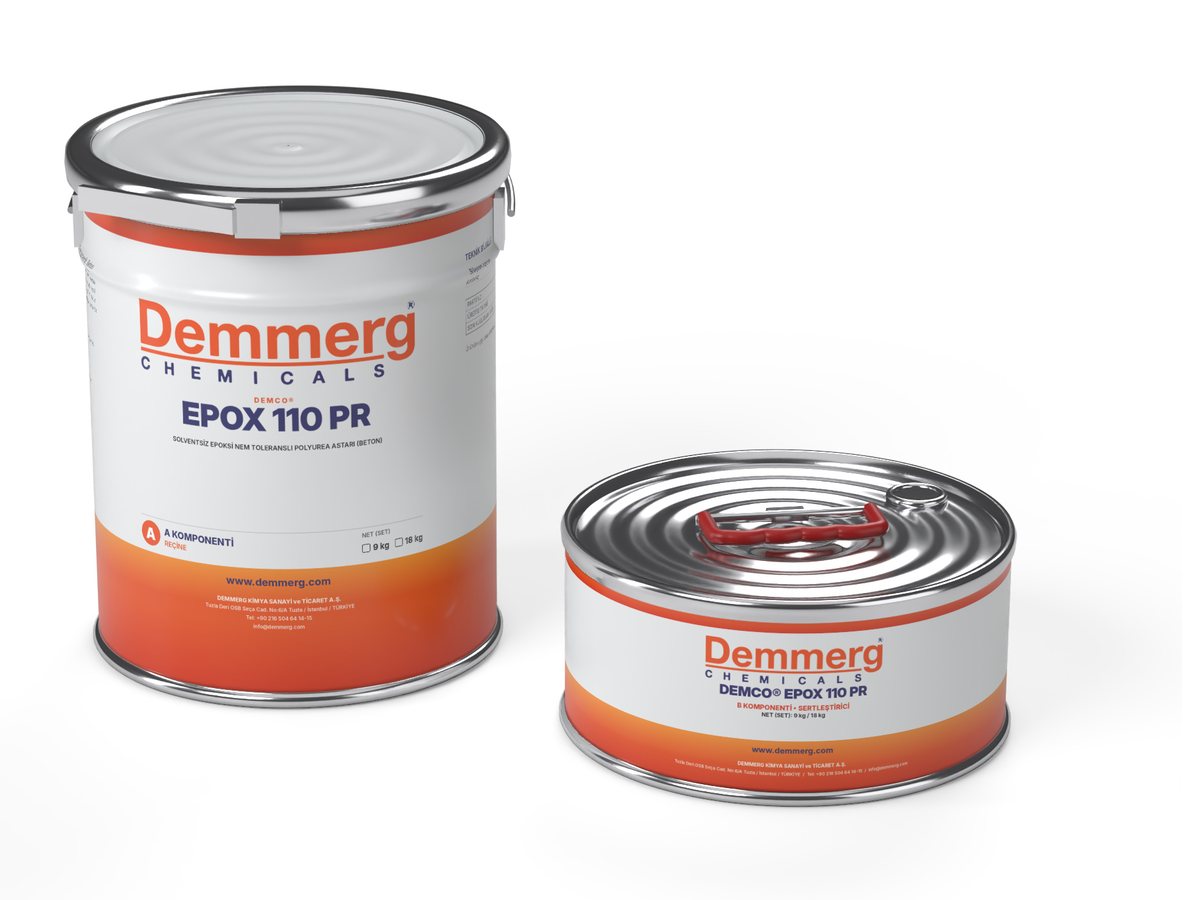
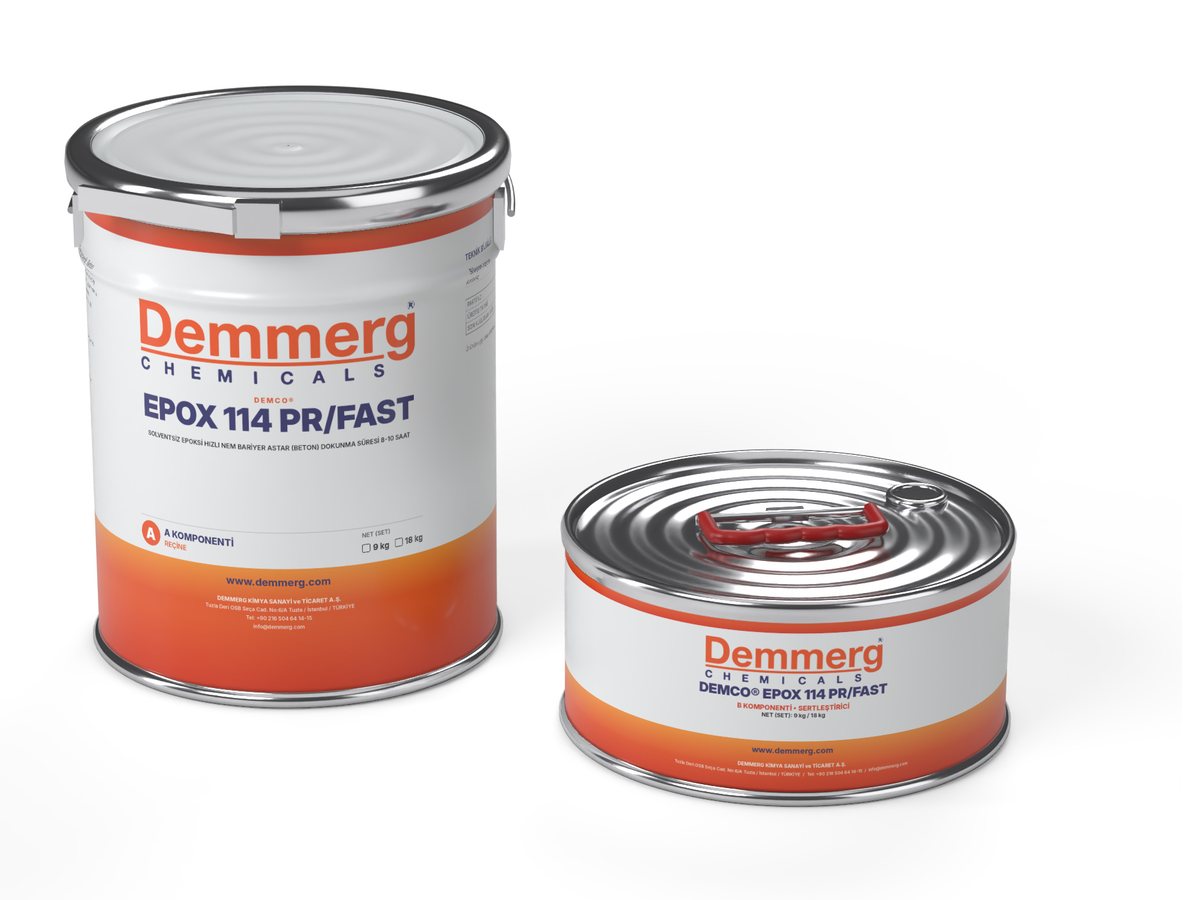
Primer: the prepared concrete is impregnated with the low-viscosity primer DEMCO EPOX 100 PR; 0.350–0.500 kg/m² per coat gives a 220–250 µm dry film, and epoxy can follow after 2–4 hours. The DEMCO EPOX 1900 SELF/C data sheet also lists the surface-tolerant moisture barrier DEMCO EPOX 110 PR; DEMCO EPOX 2004 SELF/FAST goes on the fast moisture-barrier primer DEMCO EPOX 114 PR – FAST.
Repair and intermediate coat: cracks and holes are filled with epoxy putty. In a system with an intermediate coat, the filled primer DEMCO EPOX 172 PR/F is spread with a notched trowel and broadcast with quartz if needed; after 24 hours the loose quartz is swept off, the surface is treated with a scraper or power trowel, and a scratch coat of DEMCO EPOX 2001 SELF/MID COAT follows (about 1.7 kg/m² per mm).
Self-leveling main coat: a 1 mm dry film takes 1.6 kg/m² of DEMCO EPOX 2000 SELF, DEMCO EPOX 2004 SELF/FAST or DEMCO EPOX 2700 SELF, and 1.6–1.8 kg/m² of DEMCO EPOX 1900 SELF/C or DEMCO EPOX 1901 SELF CONDUCTIVE/C. Coverage scales with thickness: 2 mm of DEMCO EPOX 2000 SELF takes 3.2 kg/m².
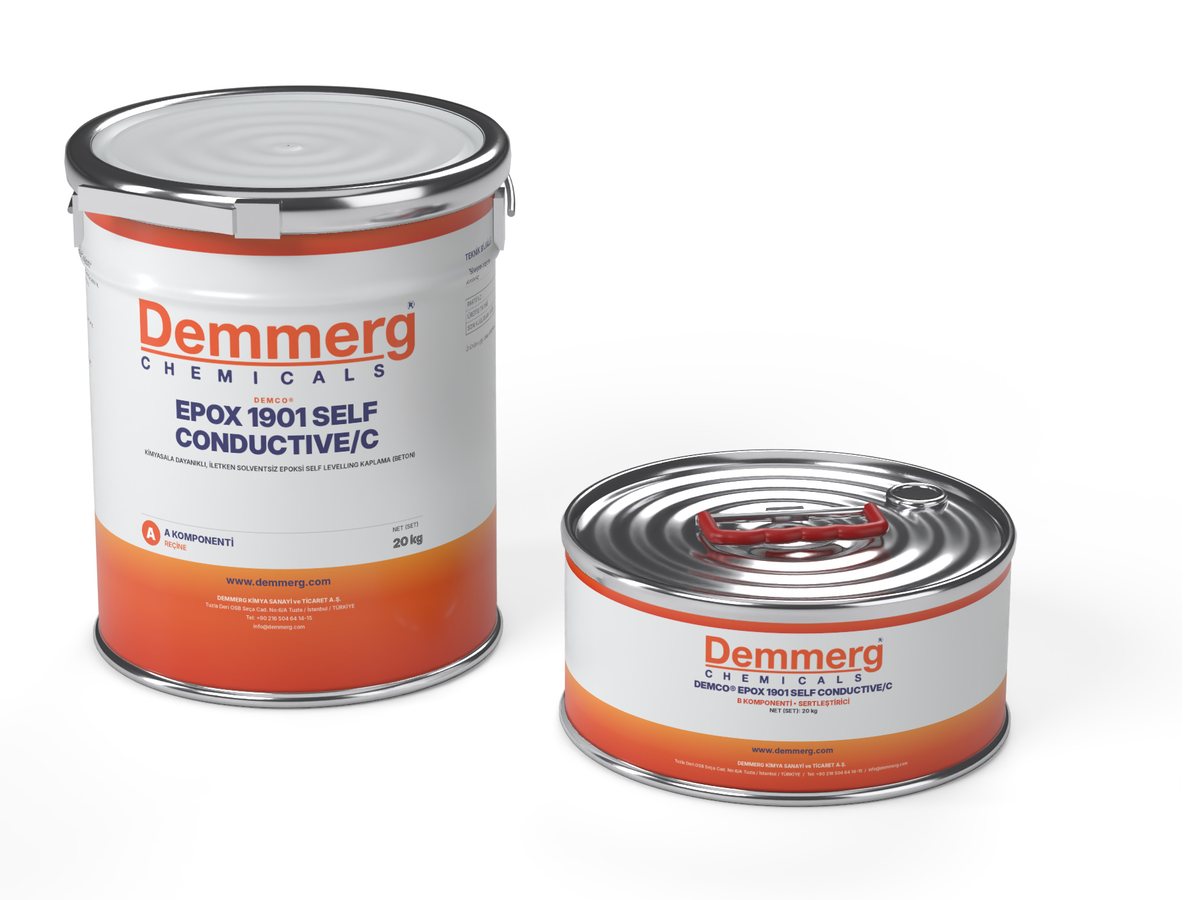
Chemical-resistant and ESD systems: under DEMCO EPOX 1900 SELF/C, the chemical-resistant DEMCO EPOX 125 PR/C is brushed or rolled over the impregnation primer. In ESD systems the conductive primer DEMCO EPOX 195 PR/CONDUCTIVE is applied at 0.200–0.300 kg/m² 8–10 hours after priming, followed by 1.75 kg/m² of DEMCO EPOX 2100 SELF/ESD or 2.0 kg/m² of DEMCO EPOX 2150 SELF/CONDUCTIVE. DEMCO EPOX 1901 SELF CONDUCTIVE/C is primed with DEMCO EPOX 115 PR.
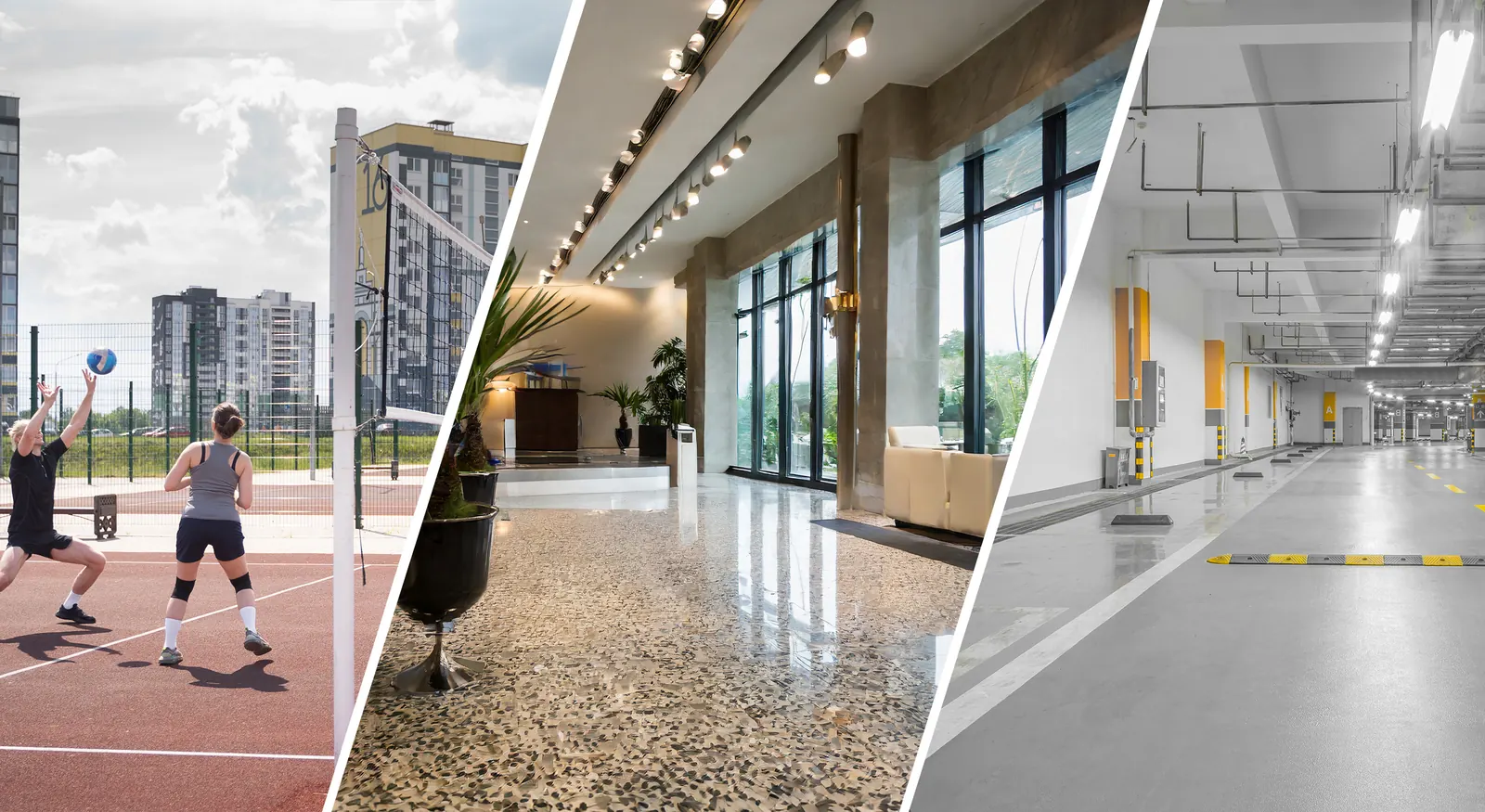
Warehouses, industrial production areas, aircraft hangars and car parks
Laboratories, hospitals and schools
Shopping centers, supermarkets, exhibition and trade fair halls
The chemical, pharmaceutical and electronics industries
Food processing and packaging plants, sterile production areas
Defense plants, lithium-ion battery production and electronics test labs (ESD systems)
Self-leveling coatings are for horizontal floors; the DEMCO EPOX 1900 SELF/C data sheet states that it is not suitable for vertical surfaces. For food plants see the food facility flooring guide.
Application conditions and curing
Surface preparation: the substrate must be free of oil, rust, dust and loose layers; glossy surfaces are roughened by shot blasting, grinding or milling.
Temperature: 15–30 °C in the working area and on the substrate; the substrate must never be below 10 °C.
Moisture: substrate moisture below 4% and ambient humidity below 80%. See the guide on moisture in concrete.
Mixing: stir component A in its own container, add all of component B and mix for at least 3 minutes at low speed to avoid air bubbles. Do not thin, and keep working until the mixed batch is used up.
Pot life (23 °C): 50–90 minutes for DEMCO EPOX 2000 SELF, 13–20 minutes for DEMCO EPOX 2004 SELF/FAST.
Application: spread over the primed surface with a notched trowel or squeegee.
Drying and curing: DEMCO EPOX 2000 SELF and DEMCO EPOX 2700 SELF are touch-dry in 8–10 hours, DEMCO EPOX 1900 SELF/C in 24–36 hours. Do not touch or wet the surface for 24 hours; full cure takes about 7 days at 20–25 °C. DEMCO EPOX 2004 SELF/FAST can take traffic within 5–6 hours at 20–23 °C.
Explosive or flammable materials, aircraft hangars, paint shops: conductive DEMCO EPOX 2150 SELF/CONDUCTIVE, or DEMCO EPOX 1901 SELF CONDUCTIVE/C where chemicals are also present.
A self-leveling coating flows out into a flat, smooth surface measured in millimeters; it is seamless, dust-free and easy to clean. A textured or orange-peel finish deliberately leaves a pattern on the surface. The right choice depends on slip-resistance needs, the cleaning method and how the floor is used; see Self-leveling or textured coating?.
Frequently asked questions
What is self-leveling epoxy?
A seamless floor coating: two-component, solvent-free epoxy resin is poured onto primed concrete and levels itself into a smooth, dust-free, easy-to-clean surface.
How thick is self-leveling epoxy applied?
Self-leveling epoxy is applied in millimeters, and data sheet values are given per 1 mm: DEMCO EPOX 2000 SELF forms a 1 mm dry film at 1.6 kg/m² in a single application. The total thickness is chosen according to mechanical load and chemical exposure; our standard specification (in Turkish) defines 1.50, 3.00 and 4.00 mm systems.
How much self-leveling epoxy do I need per m²?
Allow 1.6 kg/m² per mm for the main coat; for chemical-resistant DEMCO EPOX 1900 SELF/C the figure is 1.6–1.8 kg/m². A 20 kg kit of DEMCO EPOX 2000 SELF covers about 12.5 m² at 1 mm, plus 0.350–0.500 kg/m² of DEMCO EPOX 100 PR primer.
When can a self-leveling epoxy floor take traffic?
DEMCO EPOX 2000 SELF is touch-dry in 8–10 hours and fully cured in about 7 days at 20–25 °C; do not touch or wet it for the first 24 hours. Fast-curing DEMCO EPOX 2004 SELF/FAST can be opened to traffic within 5–6 hours at 20–23 °C.
What is the difference between self-leveling and textured epoxy?
Self-leveling epoxy flows out into a flat, smooth surface, while a textured (orange-peel) finish leaves a pattern on it; the choice depends on slip resistance, cleaning and use.
What does the cost of a self-leveling epoxy floor depend on?
Mainly on thickness and the material it requires: every millimeter of main coat means about 1.6 kg of material per m². The number of primer and intermediate coats, surface preparation and the product type (food-contact, chemical-resistant, ESD) also matter. See floor coating cost per m² or request a quote.
With your consent we use Google Analytics and Google Ads cookies to measure how the site is used and how our ads perform, and to show our ads again to people who visited the site. If you decline, these cookies are not set and the site works the same. Privacy and cookies
 EN
 tr
 de
 fr
 es
 pt
 it
 nl
 ru
 uk
 pl
 ro
 bg
 el
 ar
 fa
 az
 tk
 uz
 kk
 he