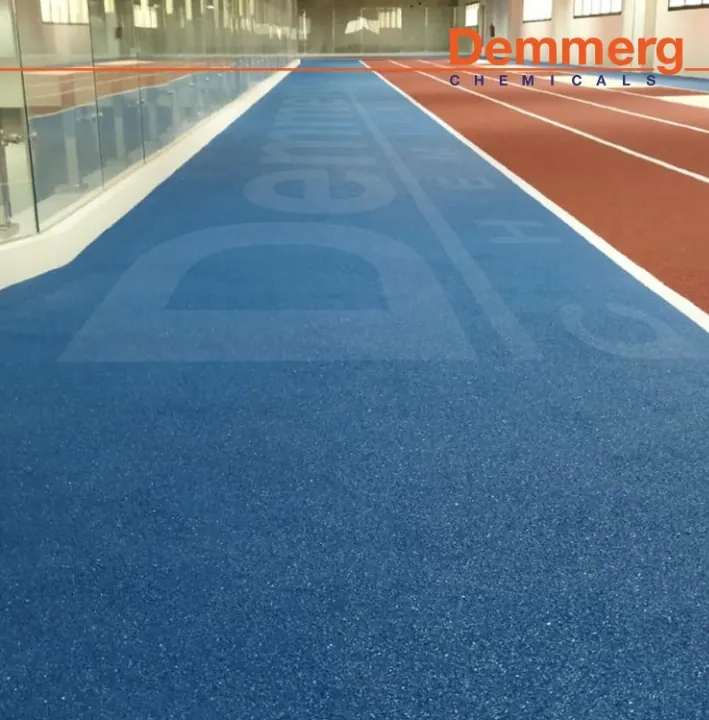
Sports flooring is a resilient, seamless surface built over a concrete slab in sports halls and on courts to absorb impact. In a polyurethane sports floor, that resilience comes from an SBR rubber mat bonded to the concrete and the elastic polyurethane layers poured over it; Demmerg manufactures every resin layer of the system, from primer to topcoat, under the DEMCO brand.
Primer, DEMCO EPOX 100 PR: solvent-free, low-viscosity (200–350 mPa·s) epoxy impregnation primer. It penetrates the capillary pores of concrete, prevents dusting and bonds the following layers; pull-off adhesion is above 2 N/mm². Being solvent-free, it is easy to use indoors.
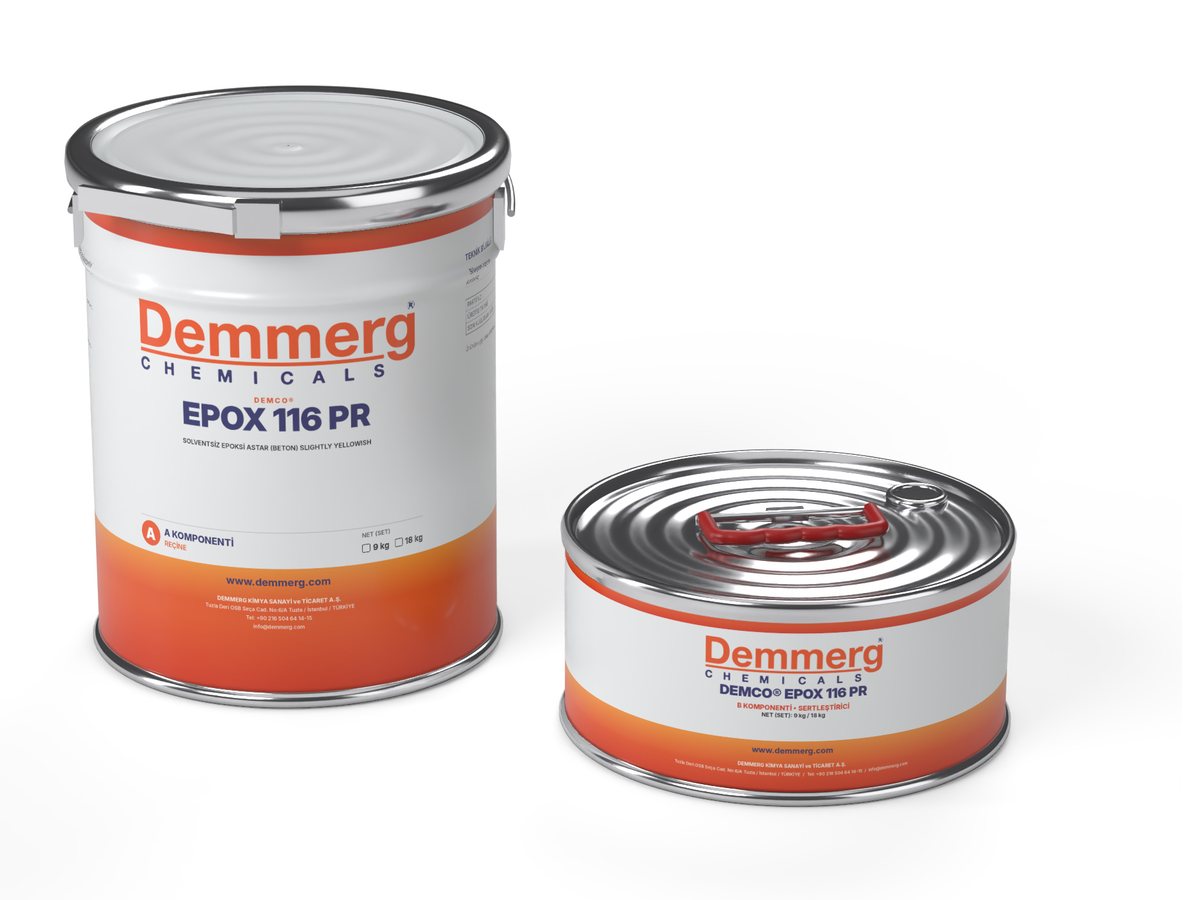
Primers, DEMCO EPOX 115 PR and DEMCO EPOX 116 PR: solvent-free epoxy primers; 400 g/m² gives a 350–370 µm film and increases the impact and chemical resistance of the concrete.
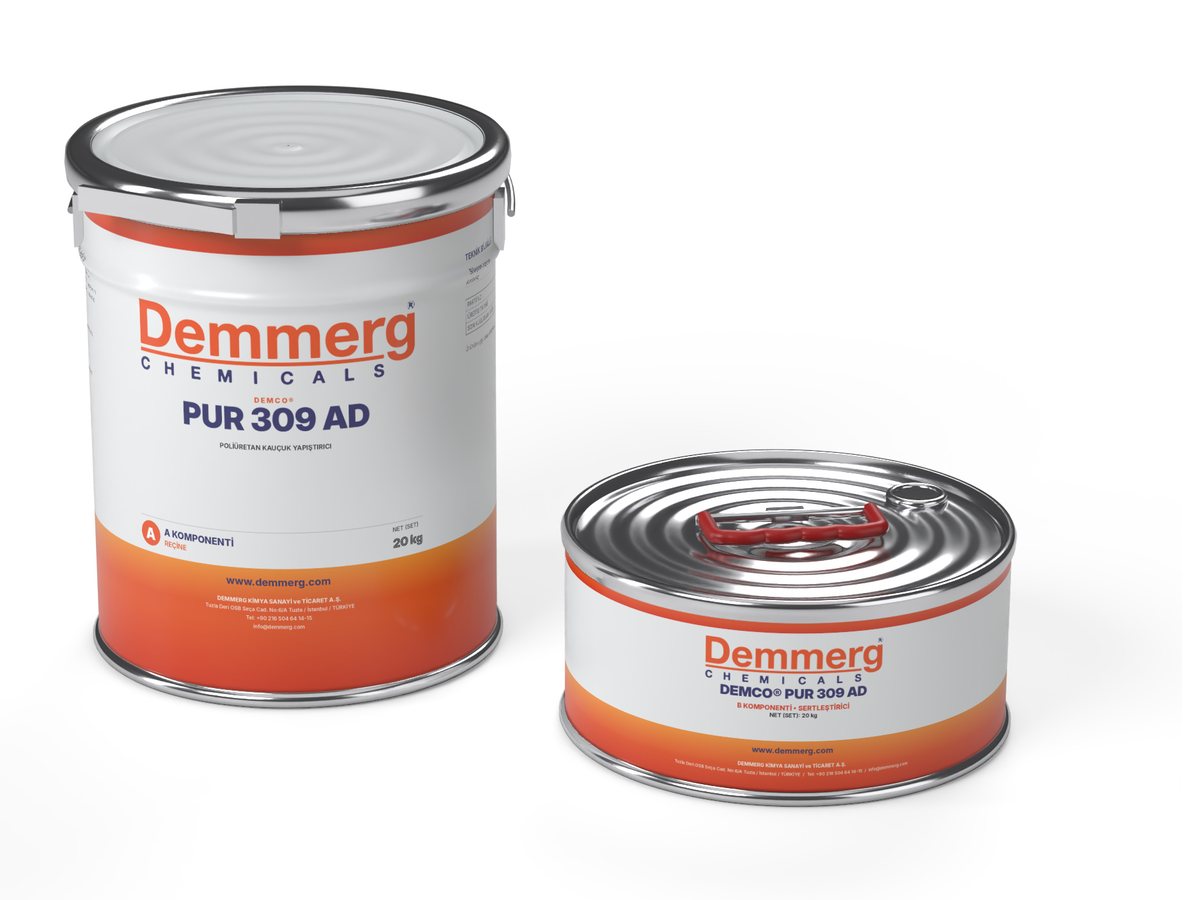
Rubber adhesive, DEMCO PUR 309 AD: two-component, solvent-free, elastic polyurethane adhesive for bonding sports flooring, SBR rubber, parquet and artificial turf. Its thixotropic consistency evens out undulations in the substrate; it is weather-resistant and suitable over underfloor heating.
Rubber binder, DEMCO PUR 595 BINDER: one-component, solvent-free polyurethane binder used at 20–25% in poured SBR and EPDM rubber systems. It is suitable for outdoor use and water-resistant.
Pore filler, DEMCO PUR 310 MID COAT: elastic polyurethane scraping, filling and leveling compound. It fills the pores of the rubber so that no air bubbles form in the coating above, keeps the rubber elastic and reduces the consumption of the next layer.
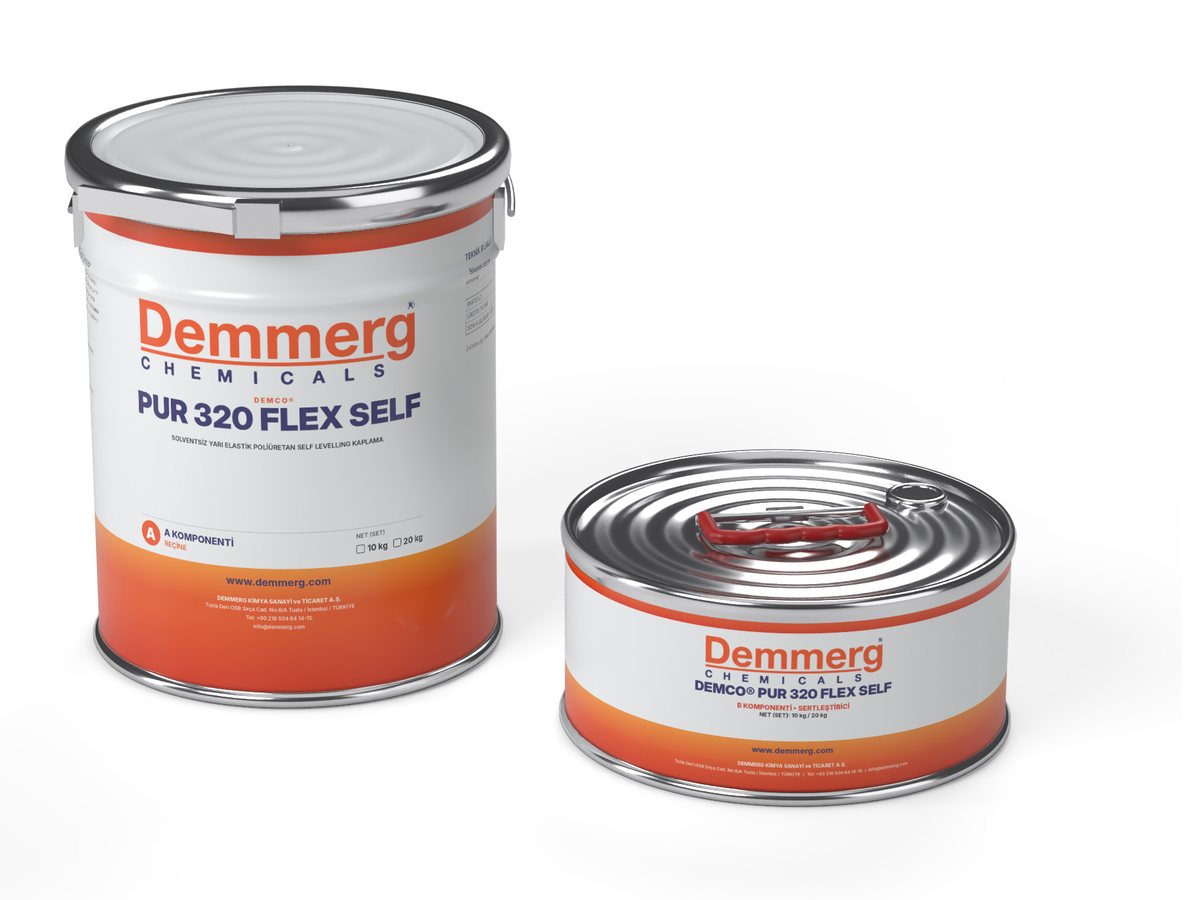
Elastic self-leveling layer, DEMCO PUR 320 FLEX SELF: solvent-free, self-leveling elastic polyurethane coating. According to its data sheet it is made in any color required, has shock-absorbing properties, is unaffected by sudden temperature changes and can be used indoors and outdoors; Taber abrasion loss is about 30 mg.
Elastic self-leveling layer, DEMCO PUR 360 SELF: solvent-free, elastic, self-leveling polyurethane floor coating; 1 mm requires 1.6–1.7 kg/m². The uses listed on its data sheet include schools, hospitals and floors where elasticity is required.
Elastic intermediate layer, DEMCO PUR 330 S FLEX: elastic polyurethane coating; one coat of 1.3–1.5 kg/m² gives 1 mm. It is used as the intermediate layer on our sports flooring samples.
Topcoat, DEMCO PUR 400 TOP COAT UVM/S: two-component, acrylic polyurethane-based, elastic matt topcoat. It moves with the substrate without cracking and, thanks to its UV resistance, does not chalk. One coat of 0.15–0.20 kg/m² gives a 50–55 µm dry film.
For other adhesives and binders, see the adhesives page.
Layers and coverage
Both systems follow the same layer sequence; the rubber mat thickness (5 mm or 8 mm) and the elastic layer product differ. Coverage figures are the values from the product data sheets; actual consumption depends on the condition of the substrate.
System A: 5 mm SBR rubber, DEMCO PUR 320 FLEX SELF
Primer: DEMCO EPOX 100 PR, 0.350–0.500 kg/m² per coat
Rubber: 5 mm SBR rubber mat bonded with DEMCO PUR 309 AD; the adhesive quantity depends on the substrate
Scrape coat and elastic layer: DEMCO PUR 310 MID COAT, about 0.800–1.000 kg/m² per coat; DEMCO PUR 320 FLEX SELF, about 0.800–1.000 kg/m² per coat
Topcoat: DEMCO PUR 400 TOP COAT UVM/S, 0.150–0.200 kg/m² per coat (50–55 µm dry film)
System B: 8 mm SBR rubber, DEMCO PUR 360 SELF
Primer: DEMCO EPOX 116 PR; consumption depends on the required film thickness (400 g/m² gives 350–370 µm)
Rubber: 8 mm SBR rubber mat bonded with DEMCO PUR 309 AD
Scrape coat and elastic layer: DEMCO PUR 310 MID COAT, about 0.800–1.000 kg/m² per coat; DEMCO PUR 360 SELF, 1.6–1.7 kg/m² per 1 mm
Topcoat: DEMCO PUR 400 TOP COAT UVM/S, 0.150–0.200 kg/m² per coat
Most of the total thickness is the rubber mat; the thickness and number of elastic coats are set for each project.
Granule-surfaced variant: DEMCO EPOX 115 PR primer, 8 mm SBR rubber bound with DEMCO PUR 595 BINDER, a DEMCO PUR 310 MID COAT scrape coat, a DEMCO PUR 320 FLEX SELF elastic layer and EPDM granules on top. According to its data sheet, DEMCO PUR 595 BINDER is used at 20–25% in poured SBR and EPDM floor systems.
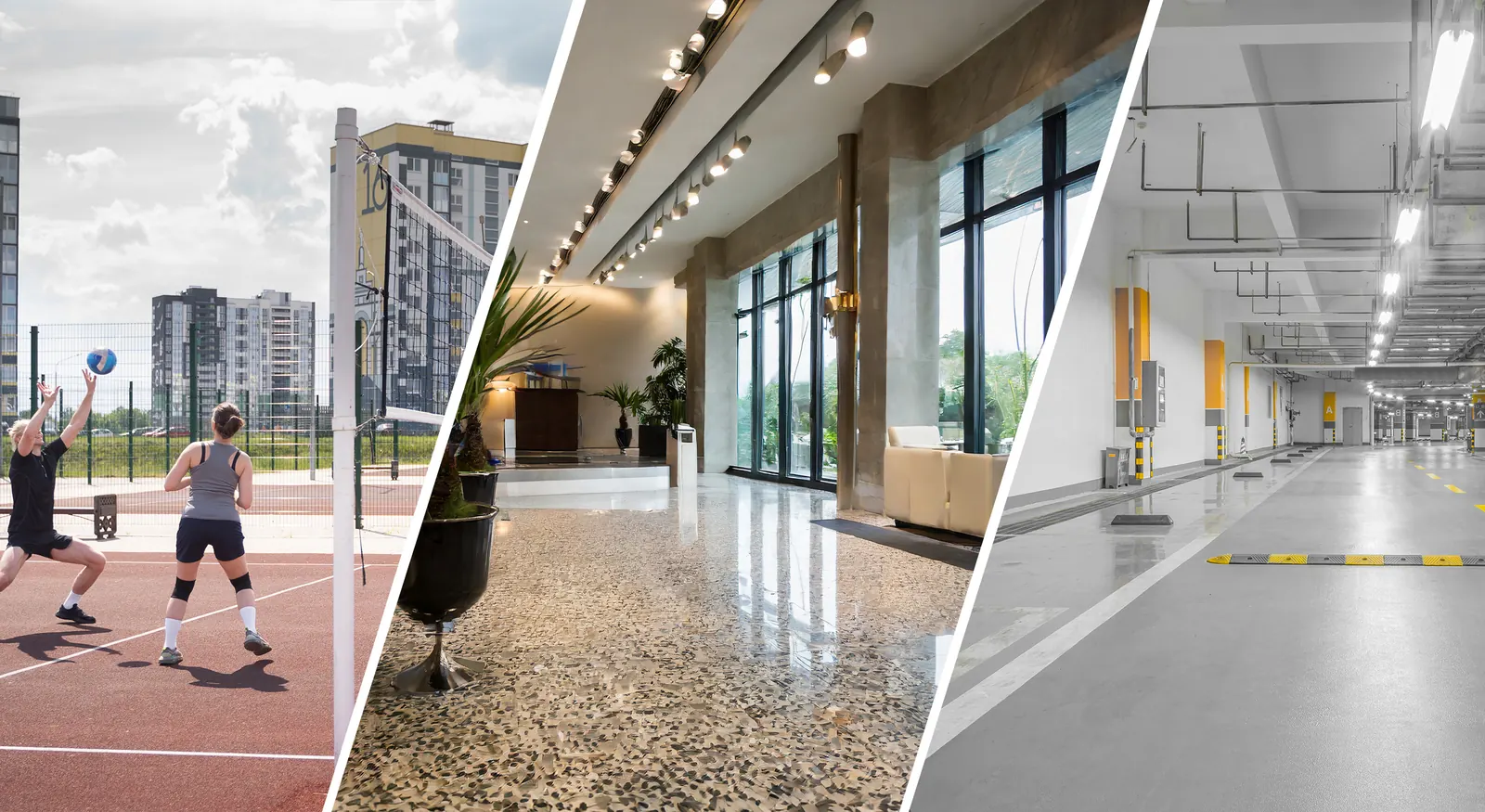
Where is it used? Indoor and outdoor areas
Indoor sports halls: see the project news on an indoor sports hall floor in Qatar coated with DEMCO epoxy and polyurethane products.
Basketball, volleyball and tennis courts, running tracks and walkways: the outdoor areas listed on the DEMCO PUR 320 FLEX SELF data sheet.
Tartan tracks: DEMCO PUR 310 MID COAT fills the pores of rubber granule mats.
Schools and floors where elasticity is required: listed on the DEMCO PUR 360 SELF data sheet.
Outdoors, sun, rain and temperature swings decide the build-up. According to the data sheets, DEMCO PUR 309 AD is weather-resistant and DEMCO PUR 595 BINDER is water-resistant; DEMCO PUR 320 FLEX SELF is suitable for outdoor conditions and unaffected by sudden temperature changes; DEMCO PUR 400 TOP COAT UVM/S is the topcoat for areas that need UV resistance. The uses listed for DEMCO PUR 360 SELF are indoor spaces, so DEMCO PUR 320 FLEX SELF is chosen as the elastic layer on outdoor courts. Indoors, the solvent-free primer, adhesive and elastic layers are the main advantage.
Application conditions
Surface preparation: remove oil, rust, dust and loose material from the concrete and roughen it by shot blasting, grinding or scarifying. Repair cracks and holes with epoxy paste.
Primer: wait until the primer is dry to the touch before applying polyurethane layers; for DEMCO EPOX 100 PR this takes at least 12–24 hours at 15–30 °C.
Rubber mat: bond with DEMCO PUR 309 AD; pot life is 60–100 minutes at 23 °C.
Scrape coat: apply DEMCO PUR 310 MID COAT with the flat side of the trowel.
Elastic self-leveling layer: spread with a notched trowel; DEMCO PUR 360 SELF can be overcoated after 24 hours.
Topcoat: apply DEMCO PUR 400 TOP COAT UVM/S by brush, roller or spray; it can be overcoated after 12–24 hours and walked on after 1 day.
The working area should be at 15–30 °C, and the substrate must never be below 10 °C. Substrate moisture must be below 4% and, while the polyurethane layers are applied, ambient humidity below 65%. After each layer, the surface must not be touched or come into contact with water for 24 hours.
Which system should you choose?
Four questions decide the system: is the area indoors or outdoors, how thick should the rubber base be, should the surface be a plain color or granule-textured, and what condition is the concrete in. System A uses a 5 mm and System B an 8 mm rubber mat; outdoor courts call for DEMCO PUR 320 FLEX SELF in the elastic layer and a UV-resistant topcoat; for an EPDM granule surface, use the granule-surfaced variant. For elastic industrial floors without a rubber base, see polyurethane flooring. Our technical team will help you define the right build-up: request a quote.
Frequently asked questions
What are sports hall floors covered with?
Sports halls need a resilient floor that absorbs impact; besides parquet and rubber tiles, poured polyurethane sports flooring is widely used. In the polyurethane system, the concrete is primed with epoxy, an SBR rubber mat is bonded with polyurethane adhesive, and an elastic self-leveling polyurethane layer and a matt topcoat are applied on top.
How thick is a polyurethane sports floor?
The rubber mat sets most of the thickness: our systems use a 5 mm or 8 mm SBR rubber mat with elastic polyurethane layers on top. In the elastic layer, DEMCO PUR 360 SELF is applied at 1.6–1.7 kg/m² per 1 mm; layer thicknesses are set for each project.
What does the cost of sports hall flooring depend on?
The main factors are the rubber mat thickness (5 mm or 8 mm) and the thickness and number of elastic polyurethane coats. The size of the area, repairs and leveling needed on the concrete, UV resistance for outdoor use and a granule surface also affect the cost. See the flooring cost per m² guide or request a quote.
Can polyurethane sports flooring be used outdoors?
Yes. DEMCO PUR 320 FLEX SELF is suitable for outdoor conditions, and its data sheet lists basketball, volleyball and tennis courts, running tracks and walkways; the UV-resistant DEMCO PUR 400 TOP COAT UVM/S topcoat does not chalk. During application the substrate must not be below 10 °C and its moisture content must be below 4%.
What is the difference between rubber and polyurethane sports flooring?
In the DEMCO system they work together: the SBR rubber mat forms the resilient base, and the polyurethane layers close its pores to give a seamless surface in the color you choose. For a rubber granule look, choose the variant with EPDM granules on top.
How long does sports flooring take to cure?
The DEMCO PUR 400 TOP COAT UVM/S topcoat can be walked on after 1 day. The polyurethane layers reach full cure in about 7 days at 20–25 °C; curing takes longer at lower temperatures.
With your consent we use Google Analytics and Google Ads cookies to measure how the site is used and how our ads perform, and to show our ads again to people who visited the site. If you decline, these cookies are not set and the site works the same. Privacy and cookies
 EN
 tr
 de
 fr
 es
 pt
 it
 nl
 ru
 uk
 pl
 ro
 bg
 el
 ar
 fa
 az
 tk
 uz
 kk
 he