EN
 tr
 de
 fr
 es
 pt
 it
 nl
 ru
 uk
 pl
 ro
 bg
 el
 ar
 fa
 az
 tk
 uz
 kk
 he

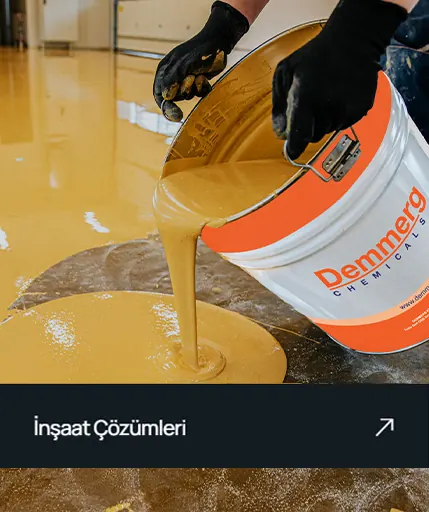
Short answer: most epoxy and polyurethane floor coatings are applied to dry concrete. DEMCO data sheets require substrate moisture below 4%, and ambient humidity below 80% for epoxies and, in most cases, below 65% for polyurethanes. If the moisture is not measured before application, the coating can blister, fail to bond or delaminate. On sound but damp concrete, a surface-tolerant epoxy moisture barrier primer (DEMCO EPOX 110 PR, 112 PR, 114 PR – FAST) is used. If moisture keeps coming up from below (rising damp), the system must be chosen after measurement and inspection of the substrate; some systems are not applied on such floors at all.
The limits and values below are taken from the technical data sheets of DEMCO primers and floor coatings.
Why is moisture a problem?
When a coating seals the surface, the water inside the concrete can no longer escape and builds up pressure under the coating. The result is bubbles, blisters and loss of adhesion. On a damp surface the primer cannot bond to the concrete, and the coating lifts off. High ambient humidity and condensation can also cause a dull surface and curing problems.
Moisture comes from four sources:
- New concrete: the mixing water leaves the concrete slowly, over weeks.
- Rising damp: in slabs laid on the ground without waterproofing or a damp-proof membrane underneath (basements, ground floors), moisture keeps coming up from below.
- Condensation: when the surface temperature approaches the dew point, moisture in the air collects on the surface as water.
- Use and accidents: leaks, washing water and spilled liquids.
Moisture limits in the data sheets
| System | Substrate moisture | Ambient humidity | Additional condition |
|---|---|---|---|
| Epoxy primers and coatings (e.g. DEMCO EPOX 100 PR, DEMCO EPOX 115 PR, DEMCO EPOX 2700 SELF) | Below 4% | Below 80% | No contact with water for 24 hours after application |
| Polyurethane coatings (e.g. DEMCO PUR 303 CONCRETE/W) | Below 4% | In most cases below 65% | – |
| PU concrete SL range (DEMCO PUR 303 CONCRETE SL 20 UB/WB, SL 23 UT/WB, SL31 COVING/WB) | Not used on substrates affected by rising damp | Not used above 75% | With SL 23 and SL31 the substrate must stay at least 3 °C above the dew point for 48 hours |
| Polyurea (DEMCO POLYUREA /PURE and /HB) | Max. 4% | – | Protect the surface from water, dew and dust for at least 24 hours |
| Surface-tolerant moisture barrier primers (DEMCO EPOX 110 PR, 112 PR, 114 PR – FAST) | Can be applied to damp surfaces | – | The data sheets give no numerical upper limit; suitability is decided with the technical team |
The data sheets of DEMCO EPOX 192 NOVOLAC TOPCOAT and DEMCO EPOX 181 PR CONDUCTIVE / WB also state that these products must not be used on substrates with rising damp.
How is concrete moisture measured?
The 4% value in the data sheets is a limit for the moisture content of the concrete. It can be measured with the calcium carbide (CM) method, with a calibrated electronic moisture meter or by oven-drying a sample. The method should be agreed at the start of the project and the results recorded.
- Calcium carbide (CM) method: the moisture in a sample taken from the concrete reacts with calcium carbide in a sealed vessel and is measured as a percentage by weight. It can be compared directly with the percentages in the data sheets.
- Electronic moisture meter: scans the surface quickly and shows damp areas. The result depends on the meter's calibration; confirm readings close to the limit with the CM method.
- Plastic sheet test (ASTM D4263): a clear polyethylene sheet of about 45 × 45 cm is taped to the surface along its edges. If condensation forms under the sheet or the surface darkens after at least 16 hours, the concrete is damp. This test gives no figure; it only shows whether moisture is present.
- Ambient measurement: air temperature, relative humidity and surface temperature are measured and the dew point is calculated. The surface temperature must be at least 3 °C above the dew point.
Measure in every part of the area, not at a single point. Column bases, edges along external walls, areas around drains, and shaded or poorly ventilated zones are where moisture is usually highest.
When can new concrete be coated?
The decision is based on measurement, not on the calendar. Wait until the moisture of the newly poured concrete has fallen below the limit in the data sheet. This depends on slab thickness, ventilation, heating and season, and can take several weeks. Some data sheets also set a minimum concrete age: for DEMCO PUR 303 CONCRETE NANO ESD/WB, new concrete must be at least 28 days old with a moisture content below 5%. The concrete must also have enough surface strength: the polyurea data sheets require an average pull-off strength of 1.5 N/mm² and a compressive strength of at least 25 N/mm².
Which primer for damp concrete?
On sound but damp surfaces, surface-tolerant epoxy moisture barrier primers are used. All three are two-component and solvent-free, penetrate the capillary pores of the concrete and block them, and have been tested to EN 1504-2 under CE marking.
| Primer | System applied on top | Pot life | Touch dry | Recoat time |
|---|---|---|---|---|
| DEMCO EPOX 110 PR | Epoxy, polyurethane and polyurea | 40 – 60 minutes | 10 – 12 hours | 2 – 4 hours |
| DEMCO EPOX 112 PR | Epoxy, polyurethane and polyurea | 30 – 55 minutes | 10 – 12 hours | 2 – 4 hours |
| DEMCO EPOX 114 PR – FAST (fast) | Epoxy and polyurethane | 20 – 40 minutes | 8 – 10 hours | 2 – 4 hours |
With DEMCO EPOX 112 PR and 114 PR – FAST, an epoxy coat can be applied after 2 – 4 hours; for a polyurethane topcoat, wait until the primer is touch-hard. This takes at least 12 – 24 hours at 15 – 30 °C. The data sheet of DEMCO EPOX 110 PR asks you to wait until it is touch-hard for both epoxy and polyurethane topcoats. For all three primers, consumption depends on the surface. On dry concrete, DEMCO EPOX 100 PR is used as the impregnating primer; one coat at 0.350 – 0.500 kg/m² gives a dry film of 220 – 250 µm.
During and after application
- While primers and coatings are applied, the substrate temperature should be 15 – 30 °C and must not fall below 10 °C.
- Indoors and outdoors, monitor substrate temperature, ambient temperature and humidity together; a drop in temperature at night can cause condensation.
- Do not touch the surface or let it come into contact with water for 24 hours after application.
- Keep to the waiting times between coats given in the data sheet; curing slows down in humid weather.
Frequently asked questions
Can epoxy be applied to damp concrete?
Standard epoxy primers need dry concrete; DEMCO data sheets require substrate moisture below 4%. On sound but damp surfaces, a surface-tolerant moisture barrier primer (DEMCO EPOX 110 PR, 112 PR or 114 PR – FAST) is used and the coating is applied on top of it.
What if the concrete moisture is above 4%?
Wait for the concrete to dry; drying can be speeded up with ventilation or heating. If there is no time to wait and the substrate is sound, a surface-tolerant moisture barrier primer can be used. If moisture keeps coming up from below, the source of the moisture and the system should first be assessed with the technical team.
How many days after pouring can new concrete be coated with epoxy?
Most data sheets give a moisture limit rather than a number of days; the concrete is coated once its moisture has fallen below that limit. Depending on slab thickness and site conditions this can take several weeks. Some products also require a minimum concrete age, for example at least 28 days for DEMCO PUR 303 CONCRETE NANO ESD/WB. Measure the moisture to decide.
What causes bubbles in the coating?
Moisture in the concrete and air in its pores expand under the coating and try to escape through the surface. Measuring moisture, choosing the right primer and applying within the temperature range in the data sheet reduce this risk. With self-leveling coatings, air is released with a spiked roller immediately after application.
Can polyurea be applied to damp concrete?
No. According to the DEMCO polyurea data sheets, surface moisture must not exceed 4%, and the concrete is first primed with DEMCO EPOX 110 PR. For details, see What is polyurea waterproofing?
Tell us the age of your floor, what it is laid on (slab on ground, upper floor) and any moisture readings in the quote form, and our technical team will recommend a suitable primer and system. For all application steps, see How to apply an epoxy floor coating.