EN
 tr
 de
 fr
 es
 pt
 it
 nl
 ru
 uk
 pl
 ro
 bg
 el
 ar
 fa
 az
 tk
 uz
 kk
 he

Short answer: the paint system for steel structures is chosen by answering three questions: what environment will the steel be in (corrosivity category), how many years must the protection last (durability range), and how can the surface be prepared? ISO 12944 covers all three: it classifies environments from C1 to CX and divides durability into four ranges, L, M, H and VH. A typical system consists of an epoxy primer on blast-cleaned (Sa 2½) steel, an intermediate coat where needed and, on surfaces exposed to sunlight, a UV-resistant polyurethane topcoat. Where blast cleaning is not possible, a surface-tolerant epoxy primer-paint is used. The number of coats and the total dry film thickness are set in the project according to the category and the required durability.
Product values are taken from the technical data sheets of DEMCO steel primers and topcoats.
Corrosivity categories in ISO 12944
ISO 12944-2 divides atmospheric environments into six categories according to their corrosivity. There are also Im categories for structures immersed in water or buried in soil.
| Category | Corrosivity | Example environments |
|---|---|---|
| C1 | Very low | Heated interiors: offices, shops, schools |
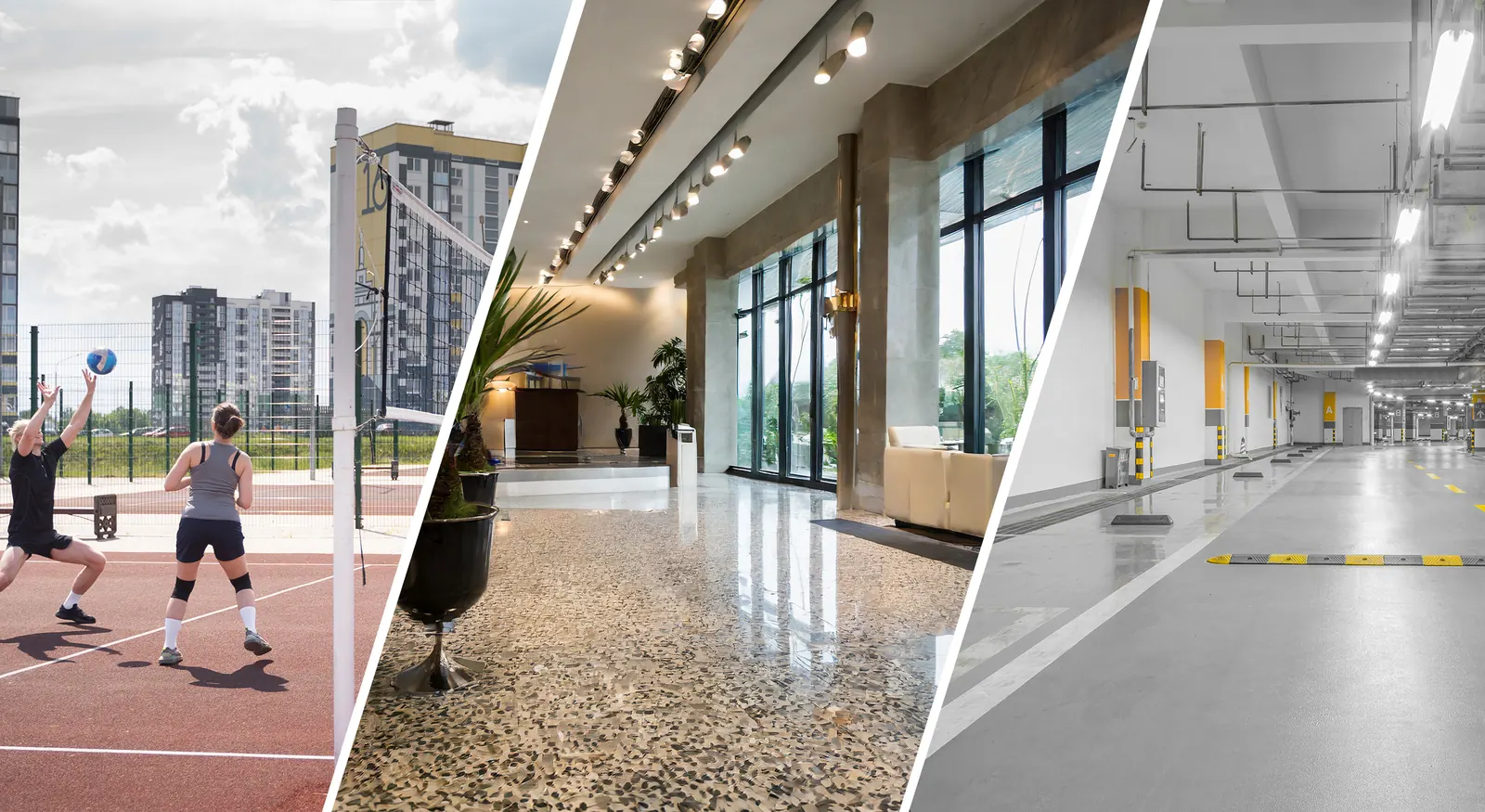
| C2 | Low | Rural areas with low pollution; unheated depots and sports halls where condensation may occur |
| C3 | Medium | Urban and light industrial atmospheres, coastal areas with low salinity; humid production rooms |
| C4 | High | Industrial areas and coastal areas with moderate salinity; chemical plants, swimming pools |
| C5 | Very high | Industrial areas with high humidity and aggressive atmosphere, coastal areas with high salinity |
| CX | Extreme | Offshore structures, extremely aggressive industrial environments |
| Im1 – Im4 | Immersed or buried | Fresh water, sea or brackish water, soil; sea water with cathodic protection |
ISO 12944-1 defines the expected time to the first major maintenance in four ranges: low (L) up to 7 years, medium (M) 7 – 15 years, high (H) 15 – 25 years, very high (VH) more than 25 years. This is not a guarantee period; it is a design value used to choose the system and plan maintenance.
Surface preparation
Surface preparation determines the life of a paint system more than anything else. ISO 8501-1 defines the cleanliness grades: St 2 and St 3 for hand and power tool cleaning, and Sa 1, Sa 2, Sa 2½ and Sa 3 for abrasive blast cleaning. The data sheets of DEMCO EPOX 2485 STEEL – CONDUCTIVE and PUR 4150 TOP COAT UV/S – CONDUCTIVE require Sa 2½ cleanliness and a medium (G) profile to EN ISO 8503-1, and the data sheet of DEMCO EPOX 1725 TOP COAT/TAR also requires Sa 2½ preparation on sheet steel.
- Substances that reduce adhesion, such as oil, grease, dirt, cleaning agent residues and phosphate layers, are removed before blast cleaning.
- Weld spatter and sharp edges are removed. After priming, weld areas are sanded and touched up.
- To prevent flash rust, blast-cleaned surfaces are primed on the same day.
- Where blast cleaning is not possible, loose rust must be removed and the surface roughened; on such surfaces the surface-tolerant DEMCO EPOX 148 STEEL is used.
DEMCO steel primers and topcoats
| Product | Type | Consumption / film per coat | Waiting time |
|---|---|---|---|
| DEMCO EPOX 132 PR/S | Solvent-based epoxy primer with rust-inhibiting pigments; for blast-cleaned steel | 0.100 – 0.150 kg/m² | Recoat 2 – 3 hours |
| DEMCO EPOX 712 PR | Epoxy polyamide high-build anticorrosive primer | 7 m²/L (75 µm dry film) | Hard dry 7 ± 1 hours |
| DEMCO EPOX 148 STEEL | Highly filled, surface-tolerant primer-paint; can also be applied to slightly damp surfaces | 0.250 – 0.300 kg/m² | Recoat 3 – 5 hours |
| DEMCO RPD 715 PR | Alkyd-based, air-drying primer | 6 – 7 m²/kg | Hard dry 4 – 5 hours |
| DEMCO EPOX 134 TOP COAT/S · DEMCO EPOX 714 | Solvent-based epoxy topcoat; cross-cut GT 0 (ISO 2409) | 0.120 – 0.150 kg/m² (50 – 55 µm) | Touch dry 3 – 4 / 1 – 2 hours |
| DEMCO PUR 410 TOP COAT UV/S | Acrylic aliphatic polyurethane topcoat; UV-resistant | 0.150 – 0.200 kg/m² (50 – 55 µm) | Recoat 8 – 24 hours |
| DEMCO PUR 412 TOP COAT UV | Solvent-based polyurethane topcoat; UV-resistant | 0.150 – 0.200 kg/m² (45 – 50 µm) | Recoat 8 – 24 hours |
| DEMCO ACR 560 | Two-component acrylic polyurethane, high gloss (70 – 90) | 12 m²/L (40 – 50 µm) | Hard dry 3 – 5 hours |
| DEMCO RPD 720 PR | Alkyd-based anticorrosive matt topcoat with zinc phosphate | 7 – 9 m²/kg | Hard dry 2 – 3 hours |
Without a primer, a single coat of DEMCO EPOX 148 STEEL gives a film as thick as primer + intermediate coat + topcoat; if well sanded, it also adheres to aluminum and galvanized surfaces. On blast-cleaned steel, DEMCO EPOX 134 TOP COAT/S and EPOX 714 are applied over DEMCO EPOX 148 STEEL or EPOX 132 PR/S primer.
Which system for which environment?
| Environment and job | Typical DEMCO system |
|---|---|
| Indoor machinery parts, agricultural machinery, hand tools, drums and valves | DEMCO RPD 715 PR primer + DEMCO RPD 720 PR, RPD 750 or RPD 780 alkyd topcoat |
| Outdoor steel structures exposed to sunlight | Epoxy primer (DEMCO EPOX 132 PR/S or EPOX 712 PR) + UV-resistant topcoat (DEMCO PUR 410 TOP COAT UV/S or ACR 560) |
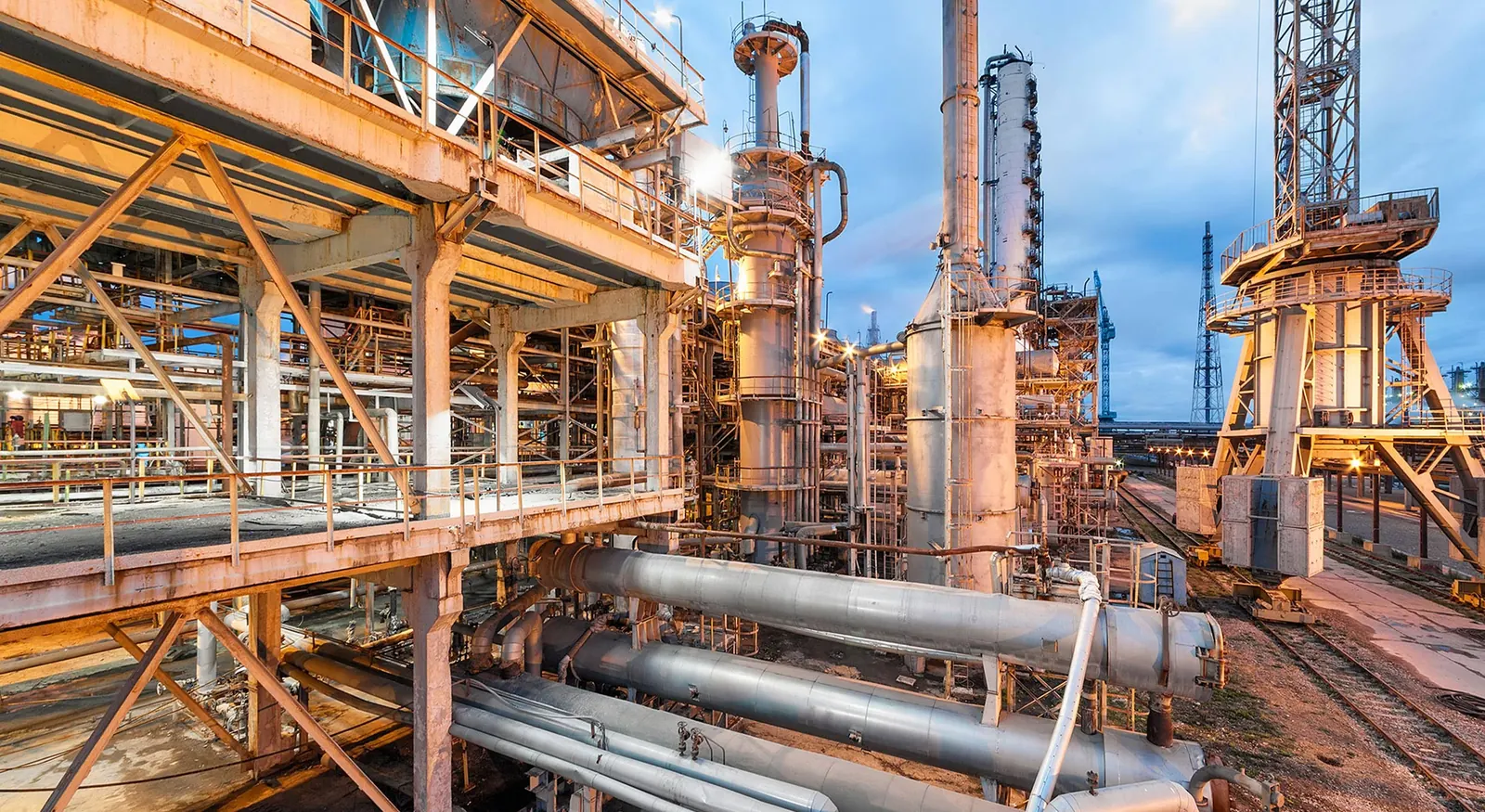
| Refineries, wastewater plants, power plants, chemical storage | DEMCO EPOX 132 PR/S primer + epoxy topcoat (DEMCO EPOX 134 TOP COAT/S or EPOX 714); on surfaces exposed to sunlight, a UV-resistant polyurethane topcoat instead of the epoxy topcoat |
| Bridges, viaducts, tanks and pipelines | Epoxy primer + DEMCO ACR 560 topcoat |
| Maintenance and repair where blast cleaning is not possible | DEMCO EPOX 148 STEEL |
| Equipment buried in soil or submerged in seawater | DEMCO EPOX 1725 TOP COAT/TAR (applied directly after Sa 2½ preparation) |
| ATEX zones and electrostatic charge build-up | DEMCO EPOX 2485 STEEL – CONDUCTIVE + DEMCO PUR 4150 TOP COAT UV/S – CONDUCTIVE |
This table is a starting point. The number of coats and the total dry film thickness are set in the project according to ISO 12944-5 for the corrosivity category and required durability; for C4, C5 or CX environments, design the system together with our technical team.
Application steps
- Environment and target: determine the corrosivity category of the environment and the required durability range.
- Surface preparation: remove oil and grease, weld spatter and sharp edges, and blast-clean the surface (usually to Sa 2½). Where blast cleaning is not possible, remove loose rust and roughen the surface mechanically.
- Conditions: for epoxy and polyurethane systems the work area should be at 15 – 30 °C and must not fall below 10 °C; ambient humidity must be below 80% for epoxies and below 65% for DEMCO PUR 410. Alkyd products are applied at 5 – 35 °C and 10 – 80% relative humidity. On site, the steel surface temperature is kept at least 3 °C above the dew point.
- Primer: the primer is applied by brush, roller or airless spray. On site, corners, edges and welds are additionally protected with a brushed stripe coat.
- Intermediate and topcoat: keep to the recoat time in the data sheet. With DEMCO PUR 410 and 412, the topcoat is applied once the primer is touch-hard, about 24 hours later depending on the ambient temperature.
- Inspection: after each coat the dry film thickness is measured (ISO 19840 for rough surfaces) and recorded. Full performance is reached in about 7 days at 20 – 25 °C.
Points to watch
- Epoxy topcoats are hard and chemical-resistant but change color and chalk in sunlight over time. On surfaces exposed to sunlight, a UV-resistant polyurethane or acrylic polyurethane is used as the topcoat.
- According to their data sheets, DEMCO EPOX 148 STEEL and EPOX 2485 STEEL – CONDUCTIVE adhere very well to galvanized and aluminum surfaces only if these are well sanded.
- Thin only with the thinner and ratio in the data sheet: 3 – 5% DEMCO EPOX 1100 THINNER for DEMCO EPOX 132 PR/S, 134 and 714; at most 5 – 10% PUR 1000 THINNER for the polyurethanes.
- In conductive systems, electrical resistance is measured after full cure.
- Use the prepared mixture within the pot life given in the data sheet.
Frequently asked questions
What is ISO 12944?
It is the international standard for protecting steel structures against corrosion with paint systems. It defines the corrosivity category of the environment (C1 – CX, Im1 – Im4), the durability range of the system (L, M, H, VH), surface preparation and the selection of paint systems.
Which primer should be used on steel?
On blast-cleaned steel, an epoxy primer (DEMCO EPOX 132 PR/S, or EPOX 712 PR for a high film build). Where blast cleaning is not possible, the surface-tolerant DEMCO EPOX 148 STEEL; for indoor metal parts under light service conditions, the alkyd primer DEMCO RPD 715 PR can be used.
What does Sa 2½ mean?
It is one of the abrasive blast-cleaning grades in ISO 8501-1 and describes a "very thorough" cleaning. No oil, grease, dirt, loose mill scale, rust or old paint remains on the surface; any remaining traces show only as slight stains.
Can an epoxy topcoat be used on outdoor steel?
Epoxy topcoats chalk and change color in sunlight. On surfaces exposed to sunlight, UV-resistant polyurethane paints such as DEMCO PUR 410 TOP COAT UV/S, PUR 412 TOP COAT UV or ACR 560 are preferred as the topcoat.
What should the total paint thickness be?
It is determined in ISO 12944-5 according to the corrosivity category, the durability range and the type of system, and is finalized in the project. DEMCO epoxy and polyurethane topcoats are applied at about 40 – 55 µm dry film per coat, and the DEMCO EPOX 712 PR primer at 75 µm.
Tell us the environment of the steel, the condition of the surface (new, rusty, previously painted) and the required durability in the quote form, and our technical team will recommend a suitable paint system. For all products, see the steel page.