EN
 tr
 de
 fr
 es
 pt
 it
 nl
 ru
 uk
 pl
 ro
 bg
 el
 ar
 fa
 az
 tk
 uz
 kk
 he

Short answer: rebar anchoring (installing starter bars) means drilling holes in existing concrete and fixing reinforcing bars in them with a two-component epoxy mortar, so that a new column, beam or wall can be connected to the existing structure. The hole is drilled, cleaned of all dust, filled with mixed epoxy mortar and the bar is inserted quickly. The epoxy reaches full cure in about 7 days at 20 – 25 °C. Hole diameter, anchorage length, bar spacing and edge distances are determined by the structural design; choosing the epoxy does not replace that calculation.
The values below are taken from the technical data sheets of DEMCO epoxy anchoring, repair and fixing products.
Where is epoxy anchoring used?
- Installing starter bars when adding new columns, beams or walls to existing reinforced concrete
- Fixing foundation bolts, machinery and crane rails to the floor
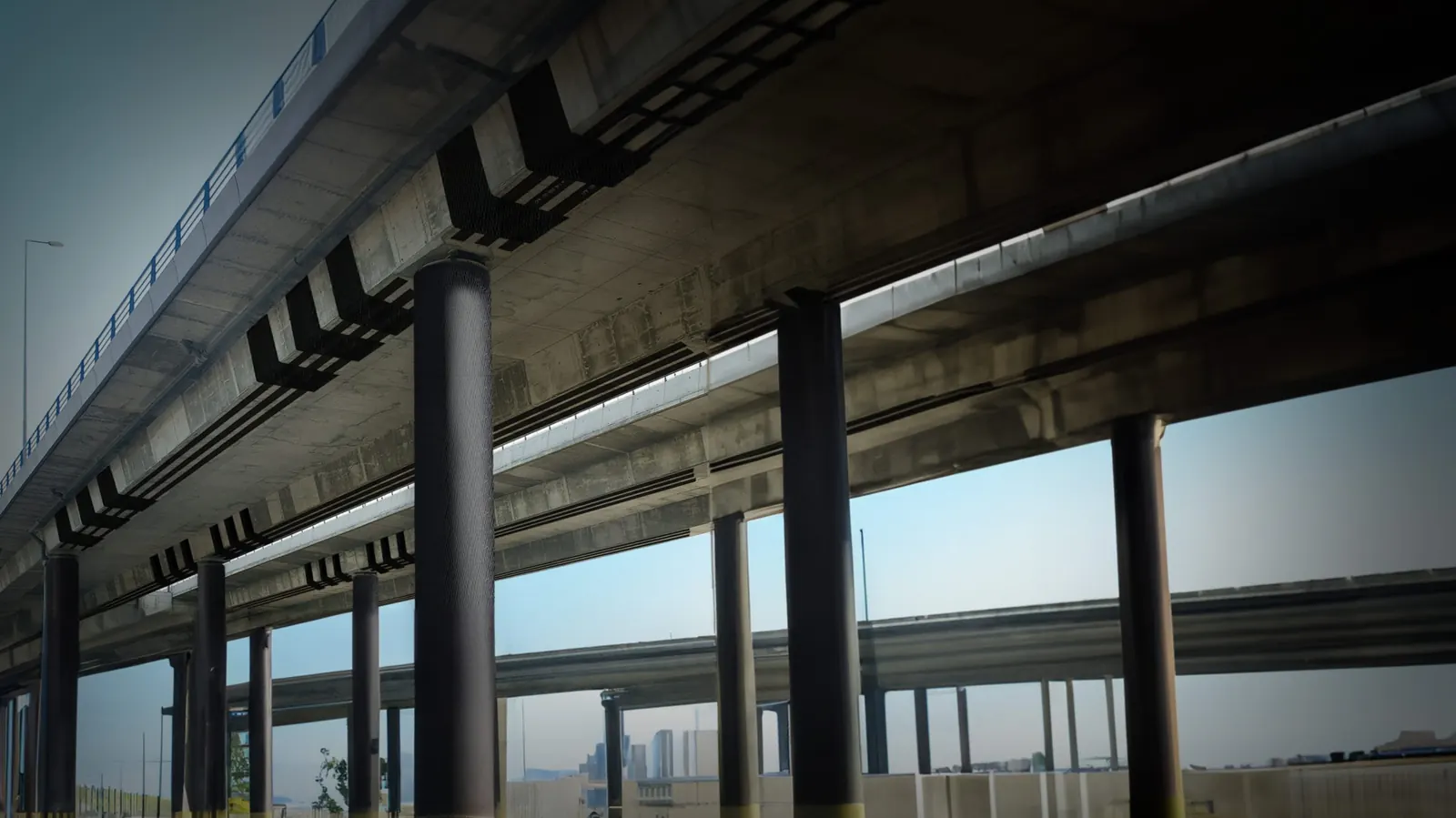
- Fixing railings and seismic dampers on bridges and viaducts
- Mounting metal profiles and fittings on concrete or steel members
- Installing starter bars in concrete and stone walls
DEMCO epoxy anchoring products
| Product | Type | Pot life (23 °C) | Touch dry | Compressive strength | Packaging |
|---|---|---|---|---|---|
| DEMCO EPOX 283 DBA | Two-component repair, anchoring and fixing mortar; thixotropic, adheres even to damp surfaces | 50 – 90 minutes | 5 – 7 hours | 60 – 80 N/mm² (DIN EN 196) | 5 and 25 kg |
| DEMCO EPOX 284 | Two-component anchoring, repair and fixing paste; thixotropic, suitable for vertical and overhead work, no primer needed | 50 – 90 minutes | 3 – 5 hours | – | 5 kg |
| DEMCO EPOX 285 AD/DK | Two-component, moisture-tolerant, thixotropic structural adhesive and repair mortar; no primer needed | 50 – 80 minutes | 3 – 5 hours | – | 10 kg |
| DEMCO EPOX 281 MORTAR | Three-component, highly filled repair, anchoring and fixing mortar; paste consistency | 80 – 140 minutes | 5 – 7 hours | 70 – 100 N/mm² (DIN EN 196) | 20 kg |
DEMCO EPOX 283 DBA and 281 MORTAR have a pull-off adhesion to concrete of ~2.5 N/mm² (TS EN 1542), with failure in the concrete; their Shore D hardness is ~77 and ~75. All four products are solvent-free, are not thinned and have been tested to EN 1504-2 under CE marking.
Rebar anchoring step by step
- Design: bar diameter, hole diameter, anchorage depth, bar spacing and edge distances are set in the structural design. Work does not start without these values.
- Drilling: holes are drilled to the diameter and depth in the design, without damaging the existing reinforcement.
- Cleaning: according to the data sheets, the hole must be completely free of dust before it is filled with epoxy. On site the hole is brushed and blown out with compressed air, repeating until no dust remains. Any standing water in the hole must be removed.
- Preparing the bar: the surface of the bar must be free of rust, oil and dust.
- Mixing: for two-component products the components are first stirred in their own containers, then all of component B is poured into A and mixed at low speed for at least 3 minutes. For DEMCO EPOX 281 MORTAR, A and B are mixed for 2 – 3 minutes, then component C is added slowly and mixing continues for another 3 – 4 minutes. Only prepare as much as can be used within the pot life.
- Filling and inserting: the hole is filled with epoxy mortar and the bar is inserted quickly. On site the hole is filled starting from the bottom and the bar is pushed in with a slight twisting motion; mortar squeezing out shows that the bar is fully seated.
- Waiting: the bar must not be moved until the epoxy has cured. Full cure takes about 7 days at 20 – 25 °C; when the bar may be loaded and when concrete may be poured is decided with the structural engineer.
Which product for which job?
| Job | DEMCO product |
|---|---|
| Rebar anchoring in reinforced concrete | DEMCO EPOX 283 DBA · DEMCO EPOX 284 · DEMCO EPOX 285 AD/DK |
| Starter bars in concrete and stone walls, repair of wide cracks | DEMCO EPOX 281 MORTAR |
| Fixing foundation bolts, machinery and crane rails | DEMCO EPOX 285 AD/DK |
| Railings and seismic dampers on bridges and viaducts | DEMCO EPOX 281 MORTAR |
| Vertical and overhead work | DEMCO EPOX 284 · DEMCO EPOX 285 AD/DK (thixotropic, no sagging) |
| Bonding to brick, masonry, natural stone, ceramics, wood and metal | DEMCO EPOX 285 AD/DK |
| Bonding expansion joint tapes | DEMCO EPOX 283 DBA · DEMCO EPOX 284 · DEMCO EPOX 280 DBA |
When metal profiles are bonded to vertical surfaces, the data sheets say the profile must be supported and pressed with clamps or props for at least 12 hours.
Points to watch during application
- The work area and the substrate should be at 15 – 30 °C; the temperature must not fall below 10 °C. In the cold, epoxy cures slowly.
- Use the mixture within its pot life: 50 – 90 minutes for DEMCO EPOX 283 DBA and 284, 50 – 80 for 285 AD/DK and 80 – 140 for 281 MORTAR (23 °C). In hot weather this time is shorter.
- No thinner or solvent is added to the products.
- The data sheets state adhesion to damp concrete surfaces, not to a hole full of water. Remove water and slurry from the hole before application.
- Dust left in the hole is what weakens the bond between epoxy and concrete most; take your time cleaning.
- Wear protective gloves, clothing and goggles, and avoid contact of the mixture with skin and eyes.
Carbon fiber anchors
In strengthening with carbon fiber fabric, DEMCO CARBON ANCHOR is used to tie the fabric to columns, beams, walls or slabs. It consists of a unidirectional carbon fiber rope with a tensile strength of 4000 MPa and a tensile modulus of at least 230 GPa. It is anchored with epoxy or hydraulic lime mortar and is also used in masonry and historic buildings. For details, see the Carbon fiber structural strengthening guide.
Frequently asked questions
Which epoxy is used for rebar anchoring?
In reinforced concrete, DEMCO EPOX 283 DBA, 284 or 285 AD/DK; in concrete and stone walls and where a highly filled mortar is needed, DEMCO EPOX 281 MORTAR. For vertical and overhead work, the thixotropic products (DEMCO EPOX 284, 285 AD/DK) do not sag.
What hole diameter and depth should be used?
These values are calculated in the structural design from the bar diameter, the concrete class and the load to be carried. The data sheets describe how to apply the product; they do not give anchorage lengths.
When can the anchored bar be loaded?
DEMCO products are touch dry in 3 – 7 hours and reach full cure in about 7 days at 20 – 25 °C. When to load the bar and when to pour concrete is decided by the structural engineer, taking the ambient temperature into account.
Can bars be anchored in damp concrete?
DEMCO EPOX 283 DBA adheres even to damp surfaces, and DEMCO EPOX 285 AD/DK is moisture-tolerant and suitable for dry and damp concrete surfaces. Standing water must not be left in the hole.
Can anchors be installed in brick or stone walls?
Yes. DEMCO EPOX 281 MORTAR is used for starter bars in concrete and stone walls, and DEMCO EPOX 285 AD/DK for structural bonding to brick, masonry and hard natural stone.
Tell us the bar diameter, the number of holes and where the work is (horizontal, vertical, overhead) in the quote form, and our technical team will recommend a suitable product and quantity. For all strengthening products, see the structural strengthening page.