EN
 tr
 de
 fr
 es
 pt
 it
 nl
 ru
 uk
 pl
 ro
 bg
 el
 ar
 fa
 az
 tk
 uz
 kk
 he

Short answer: acrylic, alkyd and MMA road marking paints differ in the number of components, the application thickness and how soon the road can be reopened to traffic. The one-component, solvent-based acrylic DEMCO ACR 600 and the alkyd DEMCO ALD 700 are applied to asphalt and concrete by roller, brush or machine; at 23 °C, ACR 600 is surface dry in 15 minutes at most and ALD 700 dries in 20 minutes. The two-component DEMCO MMA 800 is spread 2 – 3 mm thick, can be opened to traffic within 60 minutes and, according to its data sheet, has much higher physical and chemical resistance than alkyd paints. For night visibility, dropping glass beads onto ALD 700 and MMA 800 is recommended. For lines on epoxy or polyurethane-coated floors, tennis courts and basketball courts, DEMCO ACR 510 TOP COAT/S is used.
The values below are taken from the technical data sheets of DEMCO road line and marking paints; drying times are for 23 °C.
Acrylic, alkyd and MMA at a glance
| Property | DEMCO ACR 600 | DEMCO ACR 510 TOP COAT/S | DEMCO ALD 700 | DEMCO MMA 800 |
|---|---|---|---|---|
| Resin and type | Acrylic; one-component, solvent-based | Acrylic; one-component, solvent-based, air-drying | Alkyd; one-component, solvent-based | Methyl methacrylate; two-component (1 – 2% component B) |
| Substrate | Asphalt, concrete | Asphalt, concrete, epoxy and/or polyurethane-coated floors | Asphalt, concrete | Road surface (substrate type not specified separately) |
| Drying | Surface dry in 15 min at most, through dry in 30 – 45 min | Touch dry in 30 – 60 min, recoatable after 60 – 90 min, full hardness in 1 week | 20 min | 30 – 60 min |
| Open to traffic | Not given in the data sheet | Not given in the data sheet; do not touch or expose to water for 24 hours | Not given in the data sheet | Within 60 min |
| Consumption per coat | 2 – 3 m² per liter | 0.150 – 0.200 kg/m² | 500 – 900 g/m² | 4 – 6 kg for 2 – 3 mm |
| Film thickness | Not given in the data sheet | About 50 µm dry film | Not given in the data sheet | 2 – 3 mm |
| Glass beads | Not mentioned in the data sheet | Not mentioned in the data sheet | Drop-on recommended | Contained in the paint; drop-on also recommended |
| Application equipment | Roller, brush or special line marking machine; single coat | Brush, roller or spray gun | Sprayed with automatic equipment; brush or roller if needed | Hand-operated spreader equipment |
| Temperature | Ambient and surface 5 – 35 °C | Work area 15 – 30 °C; substrate must not be below 10 °C | Ambient 5 – 35 °C | Ambient 5 – 40 °C; road surface above 5 °C |
| Humidity | Surface must be free of moisture | Substrate moisture below 4%, ambient humidity below 80% | 80% max. | 80% max. |
| Color | White, yellow | Not specified in the data sheet | White, yellow | White, yellow |
The "4 – 6 kg for 2 – 3 mm" value in the DEMCO MMA 800 data sheet corresponds to an area of 1 m² at the density of 2.0 g/ml given in the same data sheet. The consumption of ACR 600 is given per liter, and its data sheet does not state a density. The data sheets of ACR 600 and ALD 700 recommend a controlled trial application to determine exact consumption.
In practice, acrylic and alkyd road paints dry as their solvent evaporates, while MMA hardens through a chemical reaction started by component B. This is why MMA hardens quickly even in a thick layer, but according to the data sheet the prepared mix must be applied within 5 – 10 minutes.
Durability and traffic
According to the data sheets of DEMCO ALD 700 and MMA 800, both paints retain their reflectivity, color and film thickness for a long time under heavy traffic, and both have very high UV and chemical resistance. The MMA 800 data sheet also states that the product's physical and chemical resistance is very high compared with alkyd-based paints. The acrylic DEMCO ACR 600 resists weather and UV and has excellent abrasion resistance; it does not yellow, is not affected by oil or diesel, and keeps its color on asphalt. The data sheet of DEMCO ACR 510 TOP COAT/S describes a flexible, abrasion-resistant paint with high resistance to UV and water.
The data sheets of ACR 600, ALD 700 and MMA 800 give luminance factor class LF7 (β ≥ 0.85) for white and LF2 (β ≥ 0.50) for yellow, and bleeding resistance class BR1; ACR 600 and ALD 700 are covered by CE certification and comply with TS EN 1871.
Glass beads and night visibility
According to the DEMCO ALD 700 data sheet, the paint is sprayed onto the surface and reflects light thanks to the glass beads sprinkled on top. The MMA 800 data sheet states that the paint keeps its reflective properties for a long time thanks to the glass beads it contains, and also recommends dropping glass beads on top. The ACR 600 data sheet says the paint helps keep roads safe in nighttime visibility conditions but does not mention glass beads; the ACR 510 TOP COAT/S data sheet does not mention glass beads either.
The data sheets do not give the type of glass beads or the quantity per m²; these are set in the project. In practice, glass beads are sprinkled while the paint is still wet; beads dropped onto dried paint do not stick.
Which paint for which area?
| Area | DEMCO product whose data sheet lists this area |
|---|---|
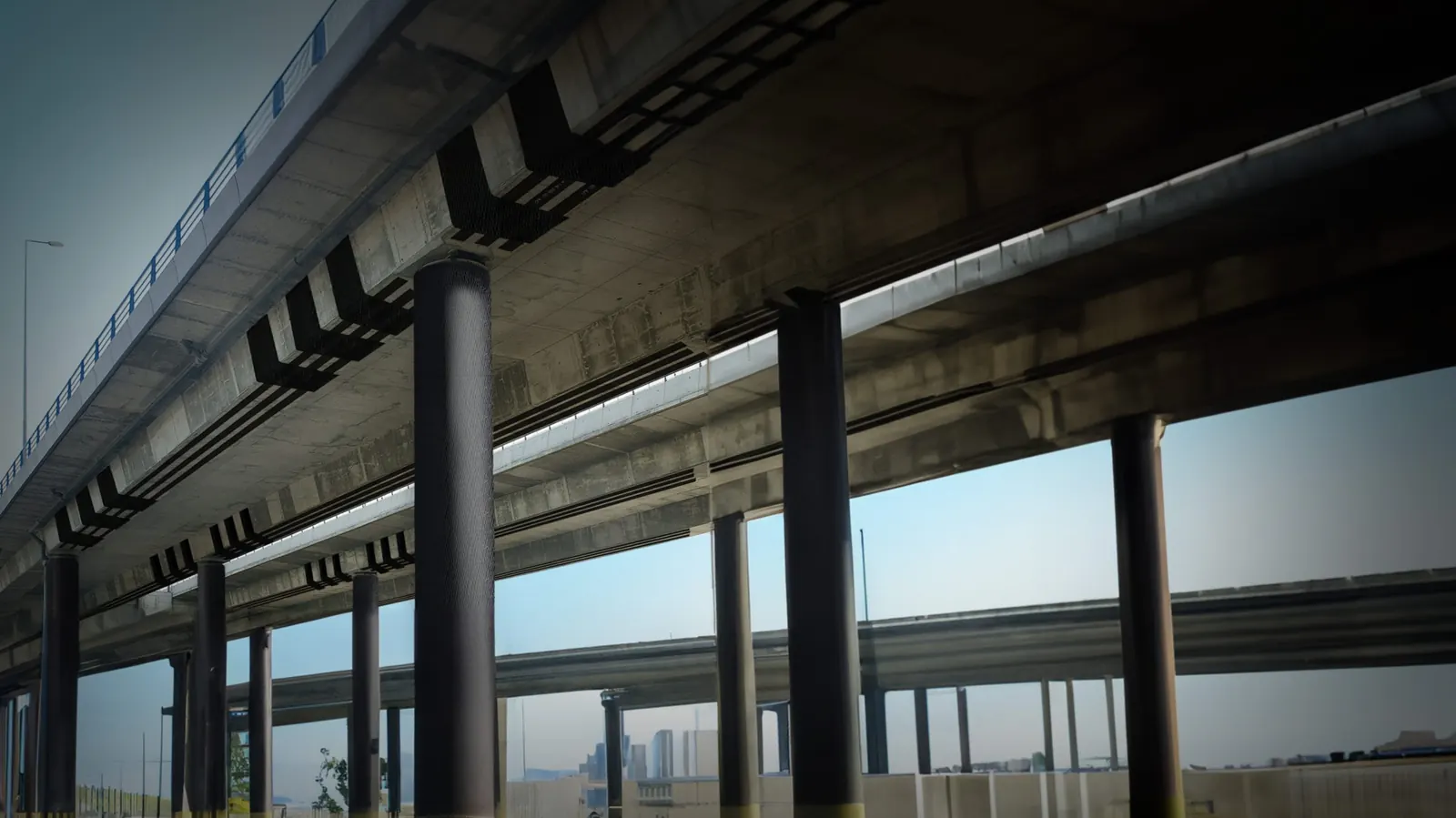
| Highways, urban and intercity roads | DEMCO ACR 600 · ALD 700 · MMA 800 · ACR 510 TOP COAT/S |
| Sidewalks and crosswalks | DEMCO ACR 600 · ALD 700 · ACR 510 TOP COAT/S |
| Airports | DEMCO ALD 700 · MMA 800 · ACR 510 TOP COAT/S |
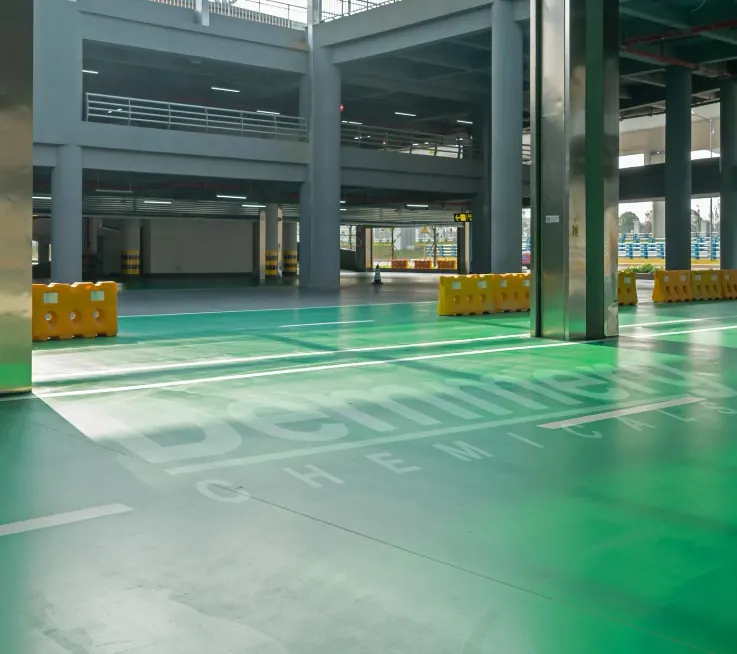
| Parking lots and warehouses | DEMCO ALD 700 · MMA 800 |
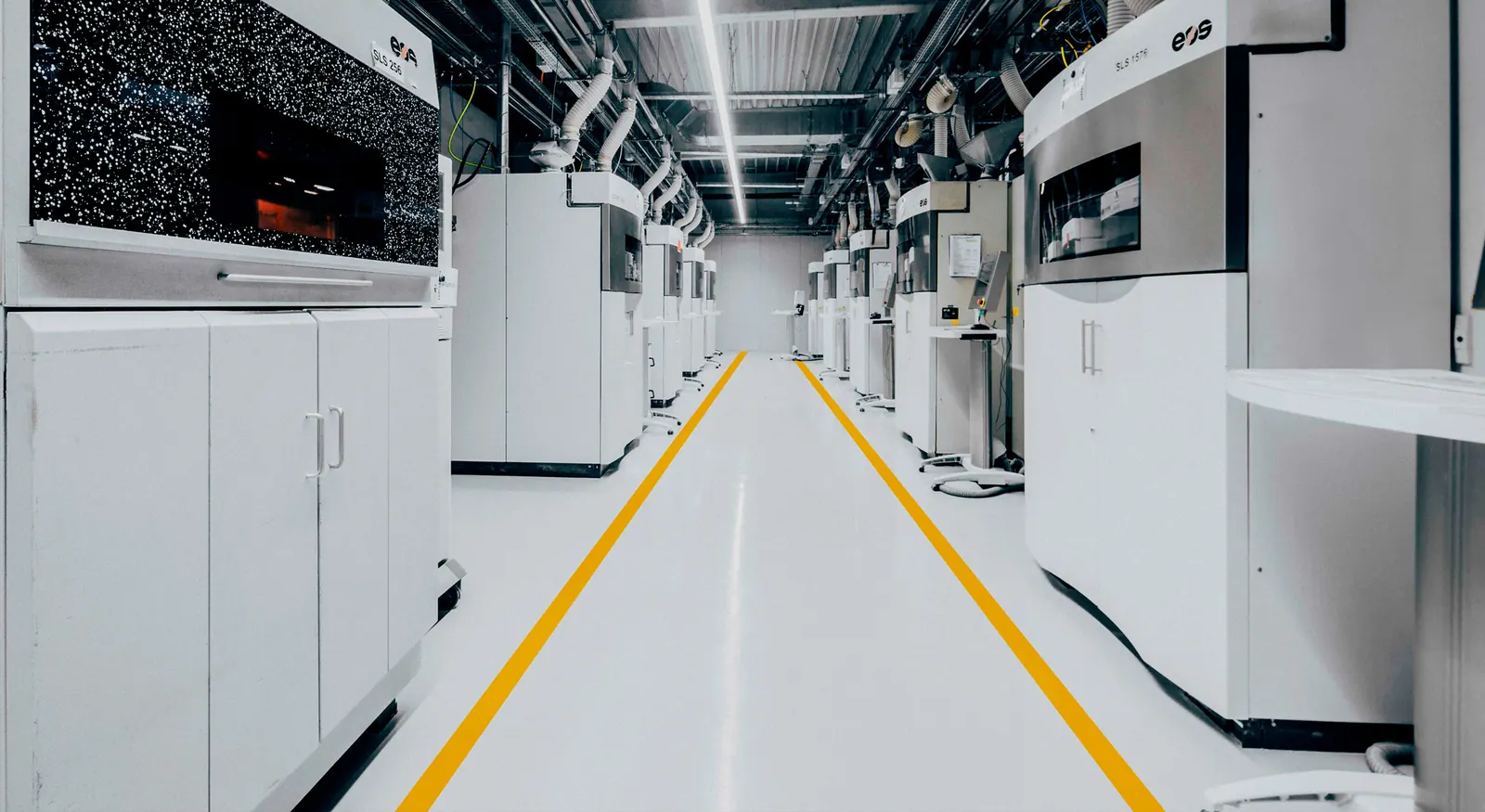
| Epoxy or polyurethane-coated floors | DEMCO ACR 510 TOP COAT/S |
| Tennis courts and basketball courts | DEMCO ACR 510 TOP COAT/S |
| Curbstones and walls | DEMCO ALD 725 (alkyd; on vertical and horizontal surfaces, 400 – 700 g/m² per coat) |
Where a road can only be closed for a short time, MMA 800, which can be opened to traffic within 60 minutes, stands out. In practice, epoxy and polyurethane coatings are used mostly on factory and warehouse floors; for walkway and zone lines on these floors, DEMCO ACR 510 TOP COAT/S, whose data sheet lists these coatings, is chosen. If an entire concrete or asphalt area is to be painted rather than just lines, the acrylic floor paint DEMCO ACR 650 is used; according to its data sheet it is UV-resistant, and 1 liter covers 2 – 3 m² in a single coat.
Application steps
- Surface preparation: the surface must be dry, dust-free and free of oil and dirt. The data sheets of ALD 700 and MMA 800 recommend removing existing paint from the road; with MMA 800, if old paint cannot easily be removed, the new paint can be applied over it. With ACR 510 TOP COAT/S, no loose layer may remain on the surface.
- Conditions: keep to the temperature and humidity limits in the table. The data sheets of ACR 600 and ALD 700 rule out application in very hot or very cold weather.
- Mixing and thinning: ACR 600 and ALD 700 are stirred thoroughly before use. MMA 800 is mixed homogeneously with 1 – 2% component B depending on the air temperature, applied within 5 – 10 minutes and not thinned. If needed, ACR 600 and ALD 700 are thinned by 3 – 5% with DEMCO road marking paint thinner, and ACR 510 TOP COAT/S with DEMCO EPOX 1100 THINNER.
- Application: the paint is applied with the equipment in the table. With ACR 600, if a second coat is needed, wait at least 1 hour between coats. With ALD 700 and MMA 800, glass beads are dropped onto the paint.
- Cleaning and safety: with ACR 600, ALD 700 and MMA 800, tools are cleaned with thinner after each use; paint must not be poured into sewers or waterways. ACR 510 TOP COAT/S and MMA 800 are flammable; keep them away from open flames.
Frequently asked questions
How long does road marking paint take to dry?
At 23 °C, DEMCO ACR 600 is surface dry in 15 minutes at most and through dry in 30 – 45 minutes; DEMCO ALD 700 dries in 20 minutes. DEMCO MMA 800 dries in 30 – 60 minutes and can be opened to traffic within 60 minutes. DEMCO ACR 510 TOP COAT/S reaches full hardness in 1 week. In practice, these times get longer at low temperatures and high humidity.
Which is more durable: acrylic, alkyd or MMA road paint?
The DEMCO MMA 800 data sheet states that the product's physical and chemical resistance is very high compared with alkyd-based paints; it is applied 2 – 3 mm thick. The data sheets do not state how many years a line will last; the expected service life is set in the project according to the traffic load and the surface.
What do glass beads do in road markings?
Glass beads reflect light and help make the line visible at night. The data sheets of DEMCO ALD 700 and MMA 800 recommend dropping glass beads onto the paint; the bead type and quantity are set in the project.
How much paint is needed for 100 meters of road line?
First calculate the area of the line: for example, a 100 m line that is 10 cm wide is 10 m². Using the data sheet values, this area needs 5 – 9 kg of DEMCO ALD 700 or 3.3 – 5 liters of DEMCO ACR 600 in a single coat, or 40 – 60 kg of DEMCO MMA 800 at 2 – 3 mm. The exact quantity varies with the surface and the conditions.
Can line marking paint be applied to an epoxy-coated floor?
Yes. The data sheet of DEMCO ACR 510 TOP COAT/S lists epoxy and/or polyurethane-coated floors as substrates. The paint is applied to a clean, dry surface at 0.150 – 0.200 kg/m² in a single coat and gives about 50 µm of dry film. For the floor coating itself, see the epoxy floor coating guide.
Tell us the area to be marked (road, parking lot, court or coated floor), the surface, the total length and width of the lines, and how long the road can be closed in the quote form, and our technical team will recommend a suitable paint and quantity. For all products, see the road line paints page.